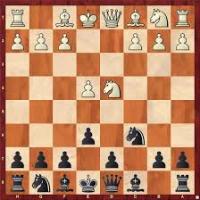
How your last session looked
Four wins and one loss, and the wins were not lucky ones. You finished most of them by checkmate or resignation and you still had time on the clock in nearly every game. That is a good sign for a bullet player: you are moving fast without being frantic.
The one that got away was a long, draining endgame. That is the clearest place to look for improvement.
What you are doing well
- You finish your attacks. Against John Mourad you played a Ruy Lopez and turned a quiet centre into a full king hunt. Queen, knight and rook all joined in and the game ended with a queen checkmate on the side of the board. Replay that win
- You convert small edges. In the win over saltytrail you were Black in a symmetrical structure and simply outplayed him. Your knight hopped around the queenside and picked off pawns until he resigned. Open the endgame win
- Your queen endgames are strong. Against Dies_Das you traded into a position where a single advanced pawn was the only real asset on the board, pushed it all the way to promotion, and then used king and queen together to force mate. That is textbook technique. See the conversion
- Your clock habits are healthy. You rarely dipped close to zero until the very last moves, which lets you calculate instead of guessing.
Where the points slip away
Your only loss came against Dan Poleg and it was a 55 move grind. Replay the loss The pattern there is worth studying. Once the queens and rooks started coming off, your king drifted to the corner and there was no escape square left. A rook check followed by a rook capture closed the net, and that was the game. This is the classic endgame trap: the material looks close to equal, but the king is trapped and the position is lost anyway.
Two things to work on:
- Give your king air. king safety matters just as much in the endgame as in the middlegame. When the queens leave the board, spend one move making a flight square for your king. That single move would have saved the game above.
- Play with a target. Long endgames are where you drift into shuffling. Before every move, decide what your plan is for the next five moves: push a pawn, activate a piece, or trade into something simpler. Idle moves add up fast in bullet.
Openings: lean on what already works
Your results point clearly in one direction.
- Black: the Caro-Kann Defense is your workhorse. You have played it more than anything else and your score with it is solidly positive. Keep it and keep refining the exchange and advance structures.
- Black: the Scandinavian Defense is holding you back. Bringing the queen out on move two costs you time and gives your opponent an easy target to chase. Either learn a couple of sharp main lines so you are not improvising every game, or replace it with the Caro-Kann structures you already know cold.
- White: the Sicilian Defense Alapin is earning its keep. It gives you a clean centre and a straightforward plan, which suits your style.
- Your Australian Defense line is clearly a weapon. The results speak for themselves, so trust it whenever you get the chance.
Bullet habits to build this week
- Scan for mating patterns every ten moves. You already win games with nets on the edge of the board. Train the back rank mate, the smothered mate and the queen plus rook net so you spot them a move before your opponent does.
- When you are up material, simplify. Trade pieces, not pawns. Your conversion skills are good enough that a cleaner board is usually a win for you.
- When you are down material, make it messy. Push a passed pawn, open a file, and aim at the enemy king. Long dry endgames are where you have been losing.
- Keep the thirty second rule. If your clock drops under thirty seconds, stop calculating long lines and play solid, active moves. Most bullet losses at your level come from one rushed move, not from thinking too long.
Bottom line
You are on a clear upswing and your attacking play plus your endgame conversions are winning you games. The single biggest lever right now is the quiet endgame: keep your king safe, always leave an escape square, and play with a plan instead of shuffling. Do that and the close matches against strong opponents will start falling your way.