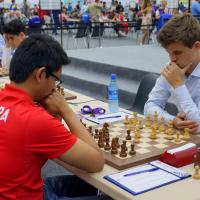
Feedback for Julio Sadorra
Julio, your recent games show a strong grasp of dynamic play and attacking chances, particularly in openings like the Four Knights Scotch and the Sicilian where you create active piece play and put pressure on your opponents early on. Your willingness to initiate aggressive pushes such as h4-h6 in the Scotch and well-timed central advances highlights your understanding of initiative and attacking motifs.
Strengths
- Opening Preparation: You demonstrate solid knowledge and sharp play in well-known openings, gaining comfortable positions and seizing the initiative, as seen in your tactical sequence involving pawn pushes and piece activity.
- Calculation and Tactics: Your precise handling in critical moments, for example placing a rook effectively and forcing resignations, shows good calculation skills. You capitalize well on tactical opportunities.
- Endgame Technique: The way you convert advantages in simplified positions reflects sound endgame understanding.
Areas for Attention
- Time Management: In several games, there were moments of time pressure that led to missed opportunities or dropped pace. Improving your clock management will help maintain accuracy throughout the game.
- Handling Defensive Challenges: While your attacking play is strong, there are occasions where a stronger, more nuanced defense could prevent your opponents from equalizing or pushing counterplay. Work on staying resourceful under pressure.
- Positional Consistency: Some games show a slight imbalance in how you handle structural and positional subtleties, such as pawn breaks and controlling key squares. Drills in these aspects could enhance your overall strategic robustness.
Suggested Focus for Improvement
- Practice managing your clock in longer games to reduce time trouble, especially in complex positions.
- Review games where your opponents gained counterplay to identify defensive improvements such as piece coordination and prophylaxis.
- Study key positional concepts related to pawn structure and planning in the openings you play often.
Keep leveraging your attacking insight and combine it with solid positional foundation and practical time handling for even stronger tournament performance.