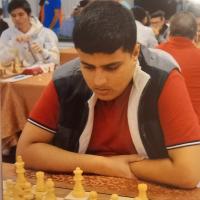
Soham Bhattacharyya, online as Soham0705, is a rising chess talent who thrives in fast online battles. Known for his Bullet prowess, he brings speed, sharp intuition, and a sense of humor to the board as he chases initiative in every game.
Online Journey and Highlights
Since 2020, Soham has been a familiar figure in online chess circles. His best results come in Bullet, where he reached a peak rating of 2937 on 2024-10-30, and in Blitz, where he peaked at 2855 on 2025-08-14. A long winning run and fearless play mark his style in fast time controls.
His repertoire is wide and pragmatic, with a taste for sharp, initiative-heavy lines. In Blitz he leans on Amazon Attack and Caro-Kann families, and he often tosses in London System: Poisoned Pawn variations for dynamic play. In Bullet, he experiments with aggressive setups such as the Siberian Attack and Modern lines, always seeking to seize the initiative first.
For a taste of his quick-thinking, here is a tiny PGN teaser:
Coach Chesswick
Recent bullet game highlights
You showcased a willingness to dive into sharp, tactical lines and keep the pressure on opponents with quick development and active piece play. In several games you maintained momentum into the middlegame, using your initiative to create practical chances under time pressure. There were also moments where plans were not crystal clear, leading to imprecise trades or missed follow‑ups as the clock ran down. The following ideas target your strongest traits and help reduce repeating pitfalls in fast games.
What you’re doing well
Choosing aggressive openings that suit a fast, tactical approach (for example, the Amar Gambit and Amazon Attack types) which generate early activity and practical chances in bullet.
Keeping the initiative with quick development and rook/queen activity when the position allows, often forcing opponents to defend under time pressure.
Competing well in dynamic middlegames, where accurate calculation for several forcing lines can yield tangible advantages.
Key improvement areas
Endgame technique under time control: practice converting small advantages into wins in simplified positions (for example, king activity in rook endings or winning minor piece endgames) so you can close out games reliably even when time is tight.
Time management in bullet: aim for a consistent thinking pace and avoid big time deficits late in the game. A simple guideline is to allocate a brief amount of time for planning (even 15–20 seconds) and then move decisively on moves where you’re confident.
Plan clarity after the opening: when entering a tactical battle, have a short, concrete plan (e.g., target a specific weakness, force a sequence of trades to reach a favorable endgame, or create a direct attack on the king). If the plan changes, reset your aim quickly and choose the safest, most principled continuation.
Against unfamiliar defenses, rely on a solid fallback plan: don’t chase too many speculative lines; instead, prioritize quick development, king safety, and plausible middlegame plans.
Opening choices and practical tips
Your strongest openings appear to be lines that lead to quick, concrete middlegame play (Amar Gambit, Amazon Attack, Modern). Deepen your understanding of these by compiling a short repertoire cheat sheet with 2–3 main middlegame plans for each.
Build a simple “fallback” against less familiar defenses: if opponents don’t respond with the expected moves, have a safe, straightforward continuation to maintain development and central control.
Structured practice plan
Daily (20–30 minutes): tactic drills focused on typical motifs from your top openings (attack patterns, quick piece coordination, and common tactical motifs you’ve encountered).
Weekly: review 2–3 recent bullet games (yours or peer games) to extract 2–3 concrete takeaways per game; note where time pressure affected decisions.
Endgames: practice 5–10 minute rook endgames and king‑pawn endings; learn a few key principles (opposition, rook activity, converting passed pawns).
Balanced schedule: alternate between bullet and longer controls to train speed and accuracy; track progress with small, measurable goals (e.g., reduce time scrambles by 50% over a month).
Trend and rating reflections
Your data suggests a modest short‑term improvement in the near term, but longer‑term trends indicate you may be facing a plateau or tougher competition. To build consistency, try a focused 4–6 week training block with specific objectives (for example, fix a primary opening plan, complete a tactical set, and review all bullet losses for missed第一 follow‑ups). Regular review of mistakes helps convert momentum into steady gains.
Optional note on practical study
If you’d like, I can generate a short, annotated PGN from one of your recent wins to highlight key decision points and alternative, safer continuations. This can help you see exactly where a different plan or quicker trade could have improved the result. For example, a sample starter could be a quick 1.e4 g6 2.d4 Bg7 3.Nf3 d6 line to practice quick development and central control.