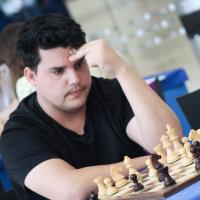
Wilver Vargas Rodriguez, online as Wilver92, is a chess player who holds the title of FIDE Master. A spirited presence in fast time controls, he specializes in Bullet and loves turning the clock into a tactical partner on the board.
Career notes
Since breaking onto the scene around 2019, Wilver has built a reputation for bold, fast-paced play across Bullet, Blitz, Rapid, and Daily formats. He earned the FIDE Master title from FIDE in recognition of his consistent results and strategic understanding of the game.
Playing style
Wilver thrives when the pace is blistering and every second counts. He favors aggressive openings and sharp tactics, using the clock as a weapon as much as the board. He blends daring attacks with solid endgame technique and keeps a calm, humorous edge even in tight spots.
Prefers Bullet as his go-to time control
Endgame awareness that seals tough wins
Creative openings that unsettle opponents
Notable moments
Among his standout stats, Wilver has a longest winning streak of 19 games. In online play, he has faced a lively roster of rivals, including funmaxi and darthsidious, contributing to a rich competitive record.
Further reading
For a visual snapshot of his rating trajectory, see this chart:
Nice run in recent blitz: you’re converting small advantages, punishing opponents’ tactical oversights, and showing good piece activity out of the opening. At the same time there are repeated practical weaknesses to address: king safety in open positions, reacting to active counterplay, and some predictable trouble vs sharp Sicilian structures.
What you’re doing well
Sharp, active developing moves — you prioritize piece activity and quick targets (example: Bc4, Bg5 and timely Nd5 in your most recent win).
Good tactical awareness in many games — you spot and win hanging pawns or loose pieces when opponents leave gaps (you punished a loose g-pawn and grabbed a decisive attack in one win).
Strong results with certain systems — you have excellent numbers with the French Defense (Exchange) and the Alapin Variation, so your repertoire choices there are working.
Clinical blitz finishing — you convert when the opponent collapses under pressure instead of drifting into unnecessary complications.
Key areas to improve
King safety in the middlegame: in the loss vs IgorKhmelnitsky you brought your king into a dangerous zone (Ke2 → Kg4). In open positions avoid walking the king forward unless you have full control of the center and opponent’s pieces. Prefer piece moves or prophylaxis instead.
Be careful opening lines around your king: pawn pushes that open files (f‑ or g‑files) need concrete calculation. If your king is near the center, prioritize closing lines or getting it to safety (castling or retreat to an air square) before launching pawn storms.
Sicilian performance: your aggregated numbers show weaker results in many Sicilian lines (Najdorf, general Sicilian). Either narrow your choice to specific, well-prepared sidelines (for blitz, solid Alapin-like setups) or study the main tactical motifs (pawn breaks, opposite-side castling attacks) so you aren’t surprised by standard counterplay.
Time management and belief in small advantages: in blitz you sometimes rely on opponent mistakes to win. Work on techniques to convert +0.5–1.0 advantages by simplifying and trading into favorable endgames instead of hunting speculative tactics only.
Concrete next steps (training plan)
Daily tactics (10–20 min): focus on motifs you saw in the loss — pins, back-rank threats, tactics that exploit an exposed king. Use mixed difficulty so you build speed and accuracy.
2× per week: 30–45 min opening focus. For Sicilian trouble: study a handful of model games in your chosen lines (pick one Najdorf/Closed line and one sideline like the Alapin). For the French, consolidate your Exchange plans — learn typical endgame and queen-exchange ideas.
1× per week: 30–45 min endgame practice — simple rook + pawn vs rook, basic king + pawn, and converting two-bishop or bishop+knight advantages. This helps when you choose safe simplifications instead of risky attacks.
Post-game review habit: after each blitz session, quickly tag 2 lost/won games and spend 10–15 min: (1) find the critical moment, (2) ask “what changed my king safety and pawn structure?”, (3) save one improvement idea to try next session.
Practical blitz tip: when ahead by a small edge, simplify and avoid committal pawn moves that open files toward your king. Use the 2-second increment — make easy, safe moves quickly to avoid time trouble while steering the position.
Game-level notes & examples
Most recent white win vs Ashlee-Deanna McNabb: You opened with Bc4 and played h3 + Bg5, then jumped Nd5 — good model of piece activity and exploitation of weak squares. Keep practicing the knight jumps to outposts (use the to review the sequence).
Win as Black vs same opponent: you capitalized on a loose g-pawn and coordinated queen + bishop pressure. That shows tactical alertness — keep working pattern recognition for these tactical motifs.
Loss vs Igor Khmelnitsky: the central theme was an exposed king and active enemy rooks. After castling long, Black created counterplay on the c‑ and b‑files; your king walk and pawn breaks opened lines against you. When opponent has active rooks on open files, prioritize king safety and reduction of targets (trade rooks or block the files).
Short checklist for your next blitz session
Before each game: decide which opening you will steer toward (pick one you’ve scored well with).
Move 10 check: is my king safe? If not, fix it now.
When ahead: simplify — trade pieces, avoid new pawn storms that open files.
When behind: look for tactical complications or blockade the opponent’s activity; don’t chase speculative swaps that improve their structure.
Want me to look at a specific game?
Send one PGN (the full game) you want drilled and I’ll give a 3–5 point annotated plan: critical moments, candidate moves you missed, and a short training drill to fix the mistake.