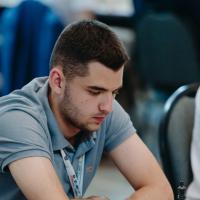

Hi Pavle!
You have a dynamic style that blends principled development with tactical alertness. Below is a personalized review based on your recent games, followed by an actionable study plan.
- Current strengths: Active piece play, willingness to seize space, sound sense of initiative.
- Typical challenges: Converting advantages in simplified positions, defending against counter-punches in sharp openings, and clock management in faster games.
- Peak achievements so far: 2612 (2025-09-26) • 2156 (2025-04-02)
1. Opening Review
• White repertoire – Your Petroff lines (e.g. vs. robopawn99) show you’re comfortable entering balanced structures and then steering play toward kingside pressure (the “h4-h5” plan appeared repeatedly). Keep it – but do add a secondary weapon against …Nf6 g6 set-ups where you sometimes over-commit pawns.
• Black repertoire – The Modern & French are serving you well, yet you occasionally fall behind in development (see loss to tonedm). Try the following rule of thumb: “Each flank pawn move must get a piece out within the next two moves.” Pin this near your board until it becomes automatic.
2. Tactical Radar
In the win vs. urbanvizintin you spotted 32…Ra1+! to break through after long manoeuvring – excellent calculation. Conversely, the live loss against Maxi4444 came from overlooking a Bc7! family-fork tactic. Pattern drills will sharpen your radar:
• 20 minutes per day on “fork + magnet + clearance” motifs.
• Use mixed difficulty; your missed ideas occur in “easy‐looking” positions.
3. Endgame Technique
When you reached the rook ending vs. kondratfilimon you converted, but not without allowing counter-checks that cost time. Focus on:
• Basic rook endings (Lucena & Philidor).
• King-and-pawn triangulation – you sometimes step into stalemate nets.
4. Strategic Consistency
You often seize space with pawn storms (h-pawn in the French Advance, f-pawn in Petroff). The key is to link pawn pushes to pieces: after moving a flank pawn, immediately ask “Which minor piece just gained/ lost a square?” Doing this consciously for one month will reduce over-expansion errors like 24…a4? vs. Fahro70.
5. Time Management
Many blitz games show you under 15 s with a winning position. Adopt the “10-20-30 rule” for live games:
• First 10 moves in ≤ 25 % of the clock.
• Next 20 moves in another 50 %.
• Final 30 moves plus endgame with the rest.
A simple on-screen reminder or a sticky note can enforce this habit.
6. Suggested Study Plan (6-weeks)
- Mondays / Thursdays – 30 min opening lab: update your Modern-Defense files; build a “trigger list” of typical pawn breaks.
- Tuesday – 45 min tactical puzzle rush + annotate two mistakes.
- Wednesday – Play one 15 | 10 rapid, annotate immediately (focus: time usage).
- Friday – Endgame session: play out Lucena & Philidor vs. engine from both sides.
- Weekend – Review your own decisive games of the week with a friend or coach. Try to answer: “What was the turning point?” before consulting the engine.
7. Motivation Tracker
Keep an eye on your consistency graphs:
and . They will quickly reveal whether late-night sessions or particular days hurt your performance.8. Mini Challenge
Replay your critical sequence from the Rossolimo win and find two alternative improvements for Black starting at move 18:
Answering this will deepen your grasp of compensation vs. material – exactly the theme that wins many of your games.
Stay disciplined and curious – your next rating jump is within reach. I’m looking forward to seeing your progress!