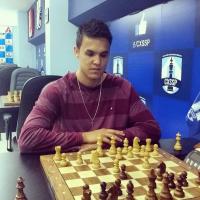
Quick summary for Dwlyan Santos
Solid blitz form — your opening preparation (especially the Sicilian/Kan lines) and attacking sense are clear strengths. Recent losses point to a few recurring evaluation and time-management issues in sharp middlegames. You're trending up overall; small targeted fixes will convert more of your close games into wins.
What you’re doing well
- Reliable opening structure: you reach familiar middlegames quickly and confidently, which limits early surprises.
- Strong attacking intuition: you spot mating nets and coordination patterns (queen+rook) and finish accurately when the opponent’s king is exposed.
- Active piece placement: you use open files and centralization effectively to increase pressure and create targets.
- Consistent longer-term progress: your 3–6 month trends and Strength Adjusted Win Rate show real improvement rather than random fluctuation.
Recurring issues to fix
- Early material grabs with incomplete development — the queen excursions (example vs montesori78) often look tempting but allow counterplay and tempo loss.
- Pawn races and passed pawns on the flank — you’ve lost games where a passed pawn became decisive after simplifying into an endgame; count race moves before trading rooks/queens.
- Time pressure decisions in blitz — when your clock gets low you opt for risky complications instead of safe simplifications or clear candidate moves.
Concrete, practical fixes
- Rule of thumb: if you win material but are behind in development or your king is exposed, assume the capture is risky — prioritize completing development or neutralizing opponent threats first.
- When simplifying into an endgame, quickly evaluate passed pawn races. If the opponent’s passed pawn is faster, avoid trades that hand them the winning plan.
- Blitz clock plan: under 30 seconds, switch to “safe mode” — pick the best of 2–3 candidate moves and prefer simplification if you’re ahead or equal.
- Practice 5–10 minute tactical bursts focused on discovered attacks, pins, and back-rank patterns you meet often in the Kan/Maroczy structures.
Study & training plan (weekly)
- 3× per week: 20 minutes of tactics (mixed difficulty, emphasize 3–5 ply calculation).
- 2× per week: 20 minutes opening review — pick one Kan/subvariation plan and memorize 2 typical pawn breaks and 3 piece locations for both sides.
- 1× per week: 30 minutes endgame practice — rook endgames and passed pawn races (these convert many close blitz wins/losses).
- Play a 10–20 blitz game block and annotate the 3 most instructive losses — identify the one move that changed the evaluation in each.
Drills for the next 2 weeks
- Daily 15 minutes: 10 tactical puzzles; note the theme (fork, pin, discovered check) and repeat similar puzzles.
- Every other day: 10 minutes of fast endgame positions (rook+pawn) — convert or stop passed pawns under time pressure.
- Weekly: review 5 losses and mark “the critical move” — practice pause-and-count (material, king safety, opponent's threats) before deciding.
Key games & positions to review
Loss to study — opening queen excursion and the later pawn‑race consequences (focus on: was Qxc3 worth it?):
Win to model — converting active pieces and winning after central exchanges (good example of turning initiative into a clean finish):
Short-term goals (next 14 days)
- Complete the drills above and reduce “risky pawn grabs” in the opening — keep a tally and aim to decline 3 of 5 early material temptations in blitz games.
- Annotate your last 10 losses and find the single mis-evaluation in each; practice the alternative move in a training game.
- Work one hour on Kan plans — pick two model games and extract typical pawn breaks (b5, d5) and piece placements.
Follow-up
- If you want, send 1–2 specific positions (FEN or a short move list) you felt unsure about and I’ll give 2–3 candidate moves with pros/cons for each.
- Review opponent files: montesori78 and dhxgenzo to see how they punished typical errors.
- Study the opening family you play most: Sicilian Defense: Kan Variation, Knight Variation.
Want a 2‑week personalized micro-plan (with daily tasks and exact puzzles)? Say “Yes” and I’ll prepare it.