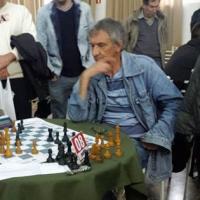
Vitorio Chemin - The FIDE Master with a Flair for Blitz
Known in the chess world by the enigmatic username DonJuanEGenaro, Vitorio Chemin has proudly earned the title of FIDE Master, a testament to their strategic prowess and dedication. With a love for the fast-paced realms of blitz and rapid chess, Vitorio's games are nothing short of captivating—and occasionally unpredictable.
Rising Through the Ranks
Vitorio's chess journey is painted vividly by a rollercoaster of ratings, peaking with a blitz rating of 2209 in 2024 and consistent highs over 2000 in rapid formats. Their blitz battles have been legendary, with a staggering 2,417 victories out of 4,738 games using the mysterious "Top Secret" opening—so secret, even their opponents are still scratching their heads!
Style and Strategy
With an average game lasting around 58 moves when winning and stretching to about 67 moves in defeats, Vitorio knows how to drag opponents into the thick of battle and grind down positions with patience. Early resignations are rare (only 1.54%), because giving up is definitely not in their vocabulary.
White pieces bring a slight edge, winning approximately 55% of the time, while black holds firm with a respectable 48%. Remarkably, their tactical awareness shines brightest when the chips are down—they have a 100% win rate after losing a piece, making comebacks look easy and terrifying opponents who hope to capitalize on mistakes.
Psychological Fortitude
Boasting a comeback rate of over 76%, Vitorio’s resilience is their trademark. Their tilt factor is low, indicating a strong mental game—because nobody wants to be the opponent who watches them bounce back stronger every time. This tenacity ensures a steady climb rather than a wild plunge, keeping fans and challengers on their toes.
When and How to Catch Vitorio in Action
Chess enthusiasts lucky enough to face Vitorio at their peak hours should know that their best time is around late morning (11 AM), boasting a win rate near an impressive 78%, as well as the noon hour (12 PM) with a 67% win rate—prime times when the coffee kicks in and the mind sharpens.
Fun Facts
- Longest winning streak: 23 games (yep, they went on a hot streak worthy of a Netflix chess docuseries).
- Most played opponent: palogalan (7 battles fought with a 57% win rate).
- Favored day of the week: Wednesday, with a win rate of over 57%—midweek magic, perhaps?
- Bullet rating? They can blitz at 2061 at their best, though losses sneak in too—because who hasn’t blundered at bullet time?
Whether playing at a leisurely rapid pace or battling on the edge of time in bullet and blitz, Vitorio Chemin blends skill, psychology, and just enough mystery to make every game a fascinating story. So, next time you hear the name DonJuanEGenaro, prepare for a chess duel that’s both challenging and entertaining—because this FIDE Master certainly knows how to make their moves count.
What I’m seeing in your blitz play
You’re currently in a solid, improvisational blitz style. Your recent data shows a positive trend over several timeframes, and your openings show willingness to fight for dynamic positions. You’re comfortable navigating tactical melees, which is a real asset in blitz, but there are common patterns you can tighten to convert more of those sharp chances into wins.
What you’re doing well
- Active piece play and tactical alertness: you often initiate forcing lines and look for concrete, sharp solutions when the position asks for it.
- Momentum in the middle game: you tend to press when you have activity, creating practical chances even from imbalanced positions.
- Experimentation with different setups: trying multiple openings can help you handle opponents’ surprises in blitz, which is a valuable edge when time is tight.
Key improvement areas
- Time management in blitz: you sometimes spend too long on early tactical decisions, risking time trouble later. Fix: set a personal thinking-time cap per move (for example, don’t exceed 15-20 seconds on routine moves in the first 15 moves) and practice quick, safe developing moves to keep time cushion.
- King safety and over-ambitious tactics: in several games you chased aggressive lines that left your king exposed or your pieces poorly coordinated. Fix: before a forcing sequence, quickly assess king safety and consider whether a simplification to a safer endgame is wiser.
- Endgame conversion: many wins rely on tactical shots; in tougher endings, you can improve by practicing common rook endings and simple king activity patterns to convert small advantages more reliably.
- Prophylaxis and threat anticipation: develop a habit of asking “what would my opponent play next?” a half-move before making a move that creates a new threat. This reduces blunders when the position shifts.
Openings: plan and practical tips
Your openings show solid willingness to engage and some strong results in flexible systems. In blitz, a clear, repeatable plan helps you avoid guesswork when the clock is running.
- Choose 1-2 dependable systems you’re comfortable with (for example, a solid, flexible setup like the London System family and a robust, counterpunching line such as a controlled Sicilian/defense variation). Build a simple middlegame plan for each so you can act quickly without overthinking.
- In dynamic defenses (like some Sicilian lines), prioritize piece development and king safety over speculative pawn breaks unless you’re confident in a concrete tactic or a clear positional advantage.
- Use your strongest openings as the foundation for your blitz repertoire and reserve a small set of surprise ideas for late-rounds when you’re pressed for time.
Practice plan to boost your results
- Time-management drills: practice with a timer, aiming to have at least a small time cushion by move 20-25 in longer blitz games. Use a fixed thinking-time budget per move and default to safe, developing moves when in doubt.
- Endgame focus: devote 10-15 minutes per session to rook endings and king activity drills. This will help you convert small advantages and defend tougher endings in blitz.
- Tactics and pattern recognition: 15-20 minutes daily on tactical puzzles that emphasize mating nets, back-rank motifs, and common overextension ideas to sharpen quick calculation under pressure.
- Post-game review: after each session, pick one win and one near-miss loss to analyze briefly. Identify one improvement you can apply in your next game and practice that idea specifically.
Optional deeper dive
If you’d like, I can annotate a recent game move-by-move to highlight exactly where time pressure or miscalculations crept in. Use this placeholder to load a game for review:
🆚 Opponent Insights
| Recent Opponents | ||
|---|---|---|
| rumata11 | 0W / 1L / 0D | View |
| drdyr | 1W / 0L / 0D | View |
| tiraspol00 | 0W / 1L / 0D | View |
| taladrochess | 0W / 1L / 0D | View |
| sharpbishop111 | 1W / 0L / 0D | View |
| jdcurrie | 1W / 0L / 0D | View |
| markrobertsepo | 1W / 0L / 0D | View |
| flojito2025 | 0W / 1L / 0D | View |
| leksa_ny | 0W / 1L / 0D | View |
| franholanlondres | 0W / 1L / 0D | View |
| Most Played Opponents | ||
|---|---|---|
| palogalan | 4W / 3L / 0D | View Games |
| rjgpchess | 3W / 2L / 1D | View Games |
| imaginarymike | 2W / 3L / 0D | View Games |
| lightsquared_bishop | 3W / 2L / 0D | View Games |
| paknightforu | 3W / 2L / 0D | View Games |
Rating
| Year | Bullet | Blitz | Rapid | Daily |
|---|---|---|---|---|
| 2025 | 1239 | 2089 | ||
| 2024 | 1438 | 1971 | 1735 | |
| 2023 | 1684 | 1863 | 1914 | |
| 2022 | 2107 | |||
| 2021 | 2059 | 2035 | ||
| 2020 | 1988 | 1981 | ||
| 2019 | 1101 | 1736 |
Stats by Year
| Year | White | Black | Moves |
|---|---|---|---|
| 2025 | 218W / 197L / 19D | 204W / 217L / 12D | 65.8 |
| 2024 | 340W / 379L / 16D | 326W / 401L / 20D | 63.7 |
| 2023 | 199W / 162L / 5D | 165W / 197L / 5D | 63.8 |
| 2022 | 126W / 93L / 3D | 119W / 102L / 6D | 66.3 |
| 2021 | 205W / 132L / 7D | 175W / 153L / 10D | 62.5 |
| 2020 | 245W / 155L / 13D | 222W / 182L / 10D | 61.0 |
| 2019 | 170W / 73L / 7D | 137W / 110L / 2D | 57.1 |
Openings: Most Played
| Blitz Opening | Games | Wins | Losses | Draws | Win Rate |
|---|---|---|---|---|---|
| Sicilian Defense: Alapin Variation | 267 | 134 | 128 | 5 | 50.2% |
| London System: Poisoned Pawn Variation | 266 | 127 | 128 | 11 | 47.7% |
| Sicilian Defense: Closed, Anti-Sveshnikov Variation, Kharlov-Kramnik Line | 193 | 98 | 89 | 6 | 50.8% |
| Bird Opening: Dutch Variation, Batavo Gambit | 174 | 85 | 87 | 2 | 48.9% |
| QGD Tarrasch: 4.cxd5 | 166 | 89 | 76 | 1 | 53.6% |
| Australian Defense | 164 | 91 | 67 | 6 | 55.5% |
| Döry Defense | 152 | 75 | 72 | 5 | 49.3% |
| Amazon Attack | 144 | 71 | 69 | 4 | 49.3% |
| Sicilian Defense | 133 | 74 | 57 | 2 | 55.6% |
| East Indian Defense | 130 | 61 | 61 | 8 | 46.9% |
| Bullet Opening | Games | Wins | Losses | Draws | Win Rate |
|---|---|---|---|---|---|
| Czech Defense | 6 | 2 | 4 | 0 | 33.3% |
| London System: Poisoned Pawn Variation | 5 | 4 | 1 | 0 | 80.0% |
| Scandinavian Defense | 3 | 2 | 1 | 0 | 66.7% |
| Barnes Opening: Walkerling | 2 | 1 | 1 | 0 | 50.0% |
| Australian Defense | 2 | 0 | 2 | 0 | 0.0% |
| Vienna Gambit, with Max Lange Defense | 2 | 1 | 1 | 0 | 50.0% |
| Diemer-Duhm Gambit (DDG): 4...f5 | 2 | 2 | 0 | 0 | 100.0% |
| Sicilian Defense: Alapin Variation | 2 | 1 | 1 | 0 | 50.0% |
| Benoni Defense: Benoni Gambit Accepted | 2 | 1 | 1 | 0 | 50.0% |
| Center Game | 2 | 1 | 1 | 0 | 50.0% |
| Rapid Opening | Games | Wins | Losses | Draws | Win Rate |
|---|---|---|---|---|---|
| QGD Tarrasch: 4.cxd5 | 8 | 7 | 1 | 0 | 87.5% |
| Döry Defense | 7 | 6 | 1 | 0 | 85.7% |
| London System: Poisoned Pawn Variation | 6 | 5 | 1 | 0 | 83.3% |
| Sicilian Defense: Alapin Variation | 6 | 5 | 1 | 0 | 83.3% |
| Sicilian Defense: Accelerated Dragon | 6 | 5 | 0 | 1 | 83.3% |
| Bird Opening: Dutch Variation, Batavo Gambit | 6 | 5 | 1 | 0 | 83.3% |
| Sicilian Defense | 5 | 5 | 0 | 0 | 100.0% |
| Philidor Defense | 4 | 4 | 0 | 0 | 100.0% |
| Australian Defense | 4 | 2 | 2 | 0 | 50.0% |
| East Indian Defense | 3 | 2 | 1 | 0 | 66.7% |
🔥 Streaks
| Streak | Longest | Current |
|---|---|---|
| Winning | 23 | 0 |
| Losing | 10 | 1 |