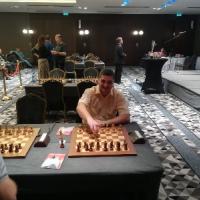
Coach's Feedback for Dejan Tasev (DTChess)
Strengths:
- Opening Choice & Preparation: Your preferred adoption of the Scandinavian Defense, especially the Mieses-Kotrc Variation, shows consistency and a good understanding of mainline theory. You also demonstrate solid play in Caro-Kann and a willingness to experiment with different openings.
- Positional Understanding: You regularly develop your pieces harmoniously, often completing development and castling early (e.g., good rook placement and piece coordination). Moves like
Re1,Rfe1, and timely piece exchanges indicate awareness of strategic plans. - Endgame Technique: In your wins, you maintain strong control and simplify into favorable endgames while capitalizing on opponent mistakes with effective pressure. Your technique in material improvement (pawn breaks, controlling key squares) is commendable.
Areas for Improvement:
- Time Management: In several games, there is a noticeable drop in your clock times compared to your opponents, leading to rushed decisions or lost on time situations. Improving your time control balance will give you more opportunities to analyze critical positions.
- Handling Complex Middle Games: A few losses, especially versus strong opponents, suggest that navigating highly tactical/complex positions is a challenge. Focus on deep calculation and verifying opponent threats before committing to major exchanges or pawn breaks.
- Avoid Tactical Oversights: Some losses came from missed tactical opportunities or falling victim to opponent tactics (e.g., back rank issues or piece forks). Regular tactical training can sharpen your pattern recognition and reduce blunders.
Specific Suggestions Based on Recent Games:
- In your Scandinavian games, continue reinforcing the plan of undermining Black's queen activity early and controlling the center, but be cautious with pawn pushes that may leave weaknesses.
- Review the position around move 30 in your last loss: check if exchanging queens or simplifying earlier could have prevented your opponent's counterplay.
- Integrate more visualization exercises where you calculate multiple forcing lines to boost your confidence in complicated tactical sequences.
Next Steps:
- Incorporate a mix of tactical puzzles and endgame drills several times a week.
- Analyze your losses with a focus on the moment where evaluation sharply shifted, and try to identify the root cause (e.g., inaccurate calculations, underestimating opponent's ideas).
- Try a training exercise of slower games (longer time control) to build your calculation endurance and better time management habits.
You're showing strong potential, and with focused training, you can elevate your game further. Keep studying, stay confident, and most importantly, enjoy your chess journey!