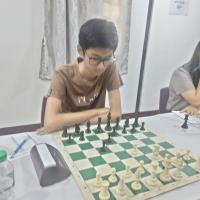
Recent rapid games: quick take and focus areas
You had three most recent games on rapid time controls. One was a win where you pressed with initiative and finished cleanly. The other two were losses where your opponent countered actively and you ended up in sharp middlegame or endgame positions. The takeaway is to strengthen your ability to convert advantages and to handle risky, tactical sequences without losing the thread of a clear plan.
What you did well and should keep developing
- Taking the initiative when the position allowed you to push active plans. When you can keep the game in a dynamic state, your chances to outplay your opponent increase.
- Searching for forcing moves and tactical chances in the middlegame. Your willingness to calculate and create threats is a strong asset in rapid games.
- Resourceful endgame spirit in some sequences, showing you don’t shy away from converting even mixed positions if you stay focused.
Things to improve with concrete steps
- Endgame conversion: after simplifying, aim to simplify to a clearly winning endgame rather than navigating unclear rook and minor piece endings. Practice standard rook endings and pawn endgames (e.g., outside passed pawn rules, king activity).
Action: pick 3 common endgame patterns and drill them in 10-minute daily sessions using a lightweight endgame trainer or puzzle set. - Handling sharp, tactical lines: in some games, the pressure of tactics led to missteps. Strengthen pattern recognition for typical combinations arising from your chosen openings and from opponent responses.
- Positional planning under time pressure: balance between tactical chances and solid positional plans. When the immediate tactic isn’t there, rely on a clear plan (improve a piece, control key squares, create a pawn break).
- Move selection in the opening phase: refine your opening repertoire to reduce chasing variation and avoid getting into disadvantageous lines too early.
Opening choices to reinforce and why
Your openings show solid results in several lines. Notably, Center Game, Scotch Game, Sicilian, and Caro-Kann schemes perform well overall. Caro-Kann and Center Game stand out as reliable, with favorable win rates across a decent number of games. Building a focused, comfortable repertoire around 2–3 of these can help you start every game with a clearer plan.
- Carο-Kann Defense: strong performance and solid structure. Practice typical plans for both short and longer games, including typical pawn structures and common break ideas.
- Center Game and Scotch Game: offer dynamic chances when you are comfortable with a sharper middlegame. Use them to practice active piece play and tactical motifs you already enjoy.
- Sicilian Defense (select variations): useful for generating winning chances when you want to fight for the initiative, but pick a specific variation you like and study it to reduce risky missteps.
Training plan to accelerate improvement
- Endgame basics (2 weeks): focus on rook endings and simple pawn endings. Do 10-minute daily drills, then play 2-3 short practice games focusing on converting small advantages.
- Opening refinement (4 weeks): choose Caro-Kann and Center Game as your core pair. For each, study 2-3 typical plans, a few representative lines, and common responses from opponents. Include 15–20 minutes of review per day.
- Tactical pattern development (ongoing): complete 15–20 puzzles per day, prioritizing forks, pins, discovered attacks, and tactic themes that frequently appear in your openings.
- Game analysis ritual (ongoing): after each rapid game, write a brief 3-point takeaway: what went well, what didn’t, and the exact plan you should follow next time in similar positions.
How your current trajectory looks
Your rating data shows positive momentum over multiple time horizons, with the most recent month-to-month figures and trend slopes indicating improvement. Maintain consistency: short, focused practice beats occasional long, unfocused sessions. Set micro-goals for each week (e.g., master one endgame pattern, add two reliable openings to your repertoire, and solve a set of tactical puzzles daily).
Next steps to implement this week
- Pick Caro-Kann as your primary opening and Center Game as your secondary. Write down a simple plan for each and review 2 typical middlegame plans per opening.
- Do 15 minutes of tactical puzzles daily, focusing on motifs that appear in your chosen openings.
- After each game, note one endgame idea you could have used to convert an advantage or simplify when ahead.
- Play 2–3 rapid games with a deliberate time-check: give yourself a fixed amount of time for the first 15 moves; if you’re behind on time, switch to safer, simpler plans to avoid time trouble.