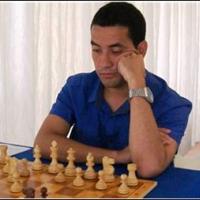
Alexander Hernandez Jimenez (FMalexhdez) - FIDE Master Extraordinaire
Known in the chess community as FMalexhdez, Alexander Hernandez Jimenez is a proud FIDE Master whose tactical flair and unwavering fighting spirit have made him a formidable opponent on the 64 squares. Earning the title "FIDE Master" is no small feat, and Alexander wears it with the confident smile of a player who's won more games than he's lost – although a fair share of losses keeps things exciting.
Quick Facts
- Peak Blitz Rating: 2404 (August 2024)
- Peak Rapid Rating: 2343 (February 2023)
- Peak Bullet Rating: 2104 (December 2024)
- Peak Daily Rating: 1895 (December 2024)
Playing Style & Strengths
Alexander’s games typically average around 66 moves to victory, indicating a love for deep, strategic battles rather than quick hijinks. He shines bright in endgames, with an impressive 71% endgame frequency, showing a fondness and patience for grinding down opponents when it matters most. Be warned: his comeback rate clocks in at a whopping 76.76%, so it's never over until it’s over!
His tactical awareness is sharp, boasting close to a 44% win rate even after losing a piece. Early resignations are a rarity, making his games a rollercoaster for both players and spectators alike.
Performance Highlights
In rapid games, Alexander’s win rate soars to an astounding 87.28%, a stronghold of dominance. Blitz can be a bit of a battlefield with a more balanced win/loss record, but that only makes his memorable victories sweeter. Daily chess? Flawless with a perfect 100% win rate in recorded games—clearly, the king of patience and precision when given time to think.
Signature Openings
Alexander enjoys keeping his secrets close in blitz, frequently opting for a "Top Secret" opening repertoire (which may or may not involve sneaky knights and well-placed rooks). Rapid games reveal a fondness for solid yet sharp lines, and occasionally a Sicilian Defense Najdorf Opocensky variation, proving he’s not afraid to dive into complex theory to test his mettle.
Recent Battles
Alexander’s most recent blitz win was a thrilling encounter where he showcased tactical precision and positional mastery, concluding with a decisive resignation from his opponent. Not all fights end in victory, though—his latest loss reminds us that even seasoned FIDE Masters face tough opponents and occasional setbacks. But true to form, Alexander’s never down for long before plotting another comeback on the board.
Off the Board
Beyond the chessboard, Alexander could probably write a book on psychology and endurance in chess, given a tilt factor of only 9 (which means he keeps his cool better than some grandmasters after a blunder). Playing mostly in the evenings at 7 PM (his best time to play), he’s the chess player who blends strategy, patience, and a sense of humor.
In short, Alexander Hernandez Jimenez is a fierce competitor with a mind for deep strategy, a knack for comebacks, and a record to be proud of—an inspiration to anyone who believes that every loss is just a prelude to a greater victory.
Overview of your recent results
You are showing a strong and versatile performance across a range of openings, with a solid win record. The short‑term trend suggests you’ve been tightening your play recently, while longer home for a stable performance is evident but with room to build consistency over time.
- Your openings performance indicates comfort in multiple popular lines, including Sicilian variants, the Italian game, and the Philidor Defense. This versatility is a real strength.
- Your overall win rate is healthy, and the strength-adjusted win rate is above 0.55, which points to solid results relative to your challenge level.
- The 6‑month rating change is modest (a small gain), while the 1‑ and 3‑month trend slopes show positive momentum. The 12‑month trend is flat, suggesting you can benefit from stabilizing and reinforcing long‑term habits.
What you’re doing well
- Opening versatility: You’re comfortable in a wide range of structures and can get good middlegame play from several well-known lines.
- Consistency in practice: The data shows repeated success across different openings, which indicates a strong understanding of general opening principles and transition to the middlegame.
- Positional awareness in the early game: You seem to develop pieces reliably and seek active lines, which helps you reach favorable middlegames more often.
Key areas to improve
- Long-term stability: With flat 6‑ and 12‑month trends, aim to turn short‑term gains into a steadier, repeatable improvement plan that carries through all phases of the game.
- Time management and calculation: Some games show opponents winning on time in your dataset; sharpen quick evaluation in critical middlegame moments and practice safe time management routines.
- Endgame readiness: Many games may end in the middlegame or early endgame. Building confidence in rook endings and minor‑piece endgames will help you convert advantages more reliably.
- Deepening plans beyond opening moves: Continue strengthening middlegame plans that apply across openings—central control, piece activity, and knowledge of typical pawn breaks for the structures you frequently reach.
Practical steps you can take
- Maintain and expand your opening repertoire, focusing on a couple of lines you’re most comfortable with, while adding a complementary second option to keep opponents guessing. Ensure you also study typical middlegame ideas arising from those lines.
- Adopt a weekly plan: dedicate one week to a specific opening (e.g., a Sicilian Moscow Variation) and another week to broadening your understanding of a related structure. End each week with a concise review of the key plans and typical pitfalls.
- Daily tactic practice: 15–20 minutes of puzzles that emphasize typical patterns from your openings (pin themes, discovered checks, tactical motifs in the middle game).
- Endgame drills: spend 20–30 minutes twice a week on fundamental rook endings, minor piece endings, and practice converting small advantages.
- Review every game with three positives and three improvements, focusing on how you transitioned from the opening to the middlegame and what you could have done differently in critical moments.
Focus for this month
- Solidifying long‑term improvement: build a small, repeatable routine you can follow for 6–8 weeks to push the 6/12‑month trend upward.
- Reinforcing time management: practice shorter, faster decision cycles in faster time controls and online drills to reduce late‑game time pressure.
- Endgame conversion: specifically target rook endings and king‑and‑pawn endgames from the openings you’re most successful in, to increase clean win chances.
Openings snapshot
Your openings performance shows strong results across several lines. While this is encouraging, keep an eye on sample sizes and avoid over‑relying on a small set of positions. Consider continuing with these strong lines while building deeper knowledge of a couple of complementary plans that arise from each.
If you’d like, I can map a focused study plan around the lines you’re most successful with and provide representative middlegame ideas for each.
Profile and reference
Track progress and study milestones at your profile page: alexanderhernandezjimenez
Optional example
To review a typical middlegame idea from your recent practice, you can look at an example game sequence:
🆚 Opponent Insights
| Recent Opponents | ||
|---|---|---|
| Ruslan Kurayan | 0W / 1L / 0D | View |
| Winston Cu-Hor | 0W / 1L / 0D | View |
| Володимир Михальський | 2W / 1L / 1D | View |
| Indy Southcott-Moyers | 0W / 1L / 0D | View |
| Anna M. Sargsyan | 1W / 0L / 1D | View |
| louis-paulsen-fan | 1W / 1L / 0D | View |
| mrpedegru25 | 0W / 1L / 0D | View |
| Grigoriy Oparin | 0W / 1L / 0D | View |
| Dmitry Kononenko | 1W / 1L / 0D | View |
| golden_kn1ght | 1W / 0L / 0D | View |
| Most Played Opponents | ||
|---|---|---|
| leon28030 | 458W / 60L / 128D | View Games |
| german5a | 53W / 0L / 7D | View Games |
| crisprochesssiuuu | 20W / 6L / 2D | View Games |
| rubenbalderrama | 26W / 0L / 0D | View Games |
| marvinguev | 11W / 3L / 4D | View Games |
Rating
| Year | Bullet | Blitz | Rapid | Daily |
|---|---|---|---|---|
| 2025 | 2363 | 2282 | 1895 | |
| 2024 | 2104 | 2243 | 2327 | 1895 |
| 2023 | 2244 | 2343 | 1891 | |
| 2022 | 2196 | 2306 | ||
| 2021 | 2235 | 2218 | 1841 | |
| 2020 | 2270 | 2213 | 1673 |
Stats by Year
| Year | White | Black | Moves |
|---|---|---|---|
| 2025 | 84W / 93L / 28D | 82W / 87L / 13D | 74.8 |
| 2024 | 106W / 122L / 34D | 109W / 116L / 15D | 76.9 |
| 2023 | 27W / 20L / 7D | 19W / 16L / 8D | 68.3 |
| 2022 | 48W / 54L / 30D | 27W / 53L / 9D | 69.7 |
| 2021 | 334W / 190L / 89D | 264W / 199L / 44D | 64.4 |
| 2020 | 231W / 177L / 31D | 207W / 200L / 28D | 71.3 |
Openings: Most Played
| Blitz Opening | Games | Wins | Losses | Draws | Win Rate |
|---|---|---|---|---|---|
| Sicilian Defense: Najdorf Variation | 248 | 94 | 143 | 11 | 37.9% |
| Sicilian Defense | 117 | 54 | 49 | 14 | 46.1% |
| Caro-Kann Defense: Exchange Variation | 101 | 34 | 56 | 11 | 33.7% |
| Sicilian Defense: Dragon Variation | 73 | 21 | 46 | 6 | 28.8% |
| Blackburne Shilling Gambit | 71 | 35 | 27 | 9 | 49.3% |
| Italian Game: Two Knights Defense | 63 | 25 | 25 | 13 | 39.7% |
| Barnes Defense | 63 | 33 | 19 | 11 | 52.4% |
| Scandinavian Defense | 61 | 23 | 25 | 13 | 37.7% |
| Sicilian Defense: Closed | 61 | 33 | 23 | 5 | 54.1% |
| Sicilian Defense: Alapin Variation | 55 | 24 | 26 | 5 | 43.6% |
| Rapid Opening | Games | Wins | Losses | Draws | Win Rate |
|---|---|---|---|---|---|
| Sicilian Defense | 82 | 76 | 1 | 5 | 92.7% |
| Sicilian Defense: Closed, Anti-Sveshnikov Variation, Kharlov-Kramnik Line | 35 | 31 | 0 | 4 | 88.6% |
| Blackburne Shilling Gambit | 31 | 29 | 0 | 2 | 93.5% |
| Barnes Defense | 24 | 24 | 0 | 0 | 100.0% |
| Italian Game: Two Knights Defense | 18 | 14 | 2 | 2 | 77.8% |
| Bishop's Opening | 15 | 13 | 0 | 2 | 86.7% |
| Italian Game: Two Knights Defense, Fegatello Attack, Leonhardt Variation | 14 | 11 | 1 | 2 | 78.6% |
| Sicilian Defense: Closed | 14 | 13 | 0 | 1 | 92.9% |
| Sicilian Defense: Alapin Variation | 11 | 9 | 0 | 2 | 81.8% |
| Barnes Opening: Walkerling | 10 | 7 | 0 | 3 | 70.0% |
| Daily Opening | Games | Wins | Losses | Draws | Win Rate |
|---|---|---|---|---|---|
| Philidor Defense | 2 | 2 | 0 | 0 | 100.0% |
| Sicilian Defense: Moscow Variation, Haag Gambit | 2 | 2 | 0 | 0 | 100.0% |
| Italian Game: Two Knights Defense | 2 | 2 | 0 | 0 | 100.0% |
| Ruy Lopez: Berlin Defense, Closed Bernstein Variation | 1 | 1 | 0 | 0 | 100.0% |
| Scotch Game | 1 | 1 | 0 | 0 | 100.0% |
| Sicilian Defense | 1 | 1 | 0 | 0 | 100.0% |
| Queen's Gambit Declined: Hastings Variation | 1 | 1 | 0 | 0 | 100.0% |
| Giuoco Piano: Tarrasch Variation | 1 | 1 | 0 | 0 | 100.0% |
| English Opening: Symmetrical Variation, Anti-Benoni Variation | 1 | 1 | 0 | 0 | 100.0% |
| Sicilian Defense: Four Knights Variation, Cobra Variation | 1 | 1 | 0 | 0 | 100.0% |
| Bullet Opening | Games | Wins | Losses | Draws | Win Rate |
|---|---|---|---|---|---|
| Sicilian Defense | 1 | 1 | 0 | 0 | 100.0% |
| Italian Game: Two Knights Defense, Fegatello Attack, Leonhardt Variation | 1 | 0 | 1 | 0 | 0.0% |
🔥 Streaks
| Streak | Longest | Current |
|---|---|---|
| Winning | 13 | 0 |
| Losing | 14 | 2 |