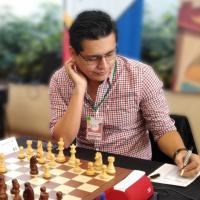
FIDE Master Isaac García
Isaac García, or as the internet knows him, GarciaIsaac, is a FIDE Master with a penchant for bullet and blitz chess that would make even the fastest grandmasters blink twice. Earning the title from FIDE means Isaac has officially proven he's not just a wizard with pawns but a master of the royal game in its most blistering forms.
Known for his swift, tactical chess battles, Isaac’s peak ratings tell quite the story: a jaw-dropping 2820 in Bullet (peak achieved in January 2025) and an impressive 2821 in Blitz (November 2024). If chess were a sprint, Isaac would be Usain Bolt — lightning quick, and sometimes leaving opponents so stunned they check their clocks instead of the board.
But don't be fooled by the speed alone. Isaac’s average games last around 80 moves in wins, showcasing a dogged endgame skill that proves patience does pay off, even when the clock’s ticking mercilessly. With a comeback rate nearing 88%, losing a piece is just another opportunity to fluster foes and showcase resilience — kind of like a phoenix rising but with more knights and less fire.
Isaac also demonstrates a quirky psychological flair: a low tilt factor of 11 and a best time to wreck opponents is at the mysterious hour of 3 AM — clearly when the magic happens, or perhaps when caffeine fuels these crazy tactics best. His win rates slightly favor playing with white, but the black pieces have also seen no shortage of victory celebrations.
His opening repertoire is humorously and successfully dubbed "Top Secret," played over 1700 times in Bullet and even more in Blitz, with nearly a 46% win rate in speed chess. Opponents like disinterred and clydehillkid have been frequent victims, trying in vain to decipher Isaac’s secret sauce.
When it comes to memorable games, his recent exploits include a dazzling victory by time against a 2722-rated player in a Sicilian Defense showdown — proving sometimes managing the clock is as deadly as the moves themselves. Isaac’s record boasts nearly as many wins as losses, reminding us that even masters stumble, but always get back up with a grin and a clever combination.
Whether it’s bullet, blitz, or rapid, Isaac García embodies the thrilling unpredictability of chess played at a blistering pace – smart, fierce, and just a bit mysterious. If you ever face GarciaIsaac online, prepare yourself for a roller coaster of brilliant tactics, adrenaline-pumping time scrambles, and the occasional “What?! How did he just do that?” moment.
Quick summary
Nice sharp play in the win vs cansar10 — you converted a kingside attack into a knockout with a decisive knight landing (Nf5#). Your losses show a recurring practical issue: time trouble and passive play in messy rook/endgame positions. Below are targeted, actionable ways to keep the good parts and fix the holes.
Highlight — what you did well
- Strong attacking sense: in your win you built a kingside storm, created a passed pawn on e7 and used coordination between queen, rooks and knights to force the king into a mating net.
- Good tactical vision: the e7 advance (pushing a passed pawn into the enemy camp) created concrete threats that forced defensive concessions from Black.
- Flexibility in the middlegame: you switch between piece sacrifice ideas and quiet pressure well — that makes you dangerous in blitz.
- Opening consistency: you favor systems (Sicilian Closed, English/Anglo-Indian) you know — leverage that edge.
- Finishing technique in the win: the final knight jump to f5 was clean and decisive — good calculation under pressure.
Inspect the winning sequence (key moves):
Key patterns and mistakes to fix
- Time management / flag risk: several losses end because you reach severe time trouble. You play very well tactically but often spend too long in complex middlegames. In blitz you need a consistent clock strategy (see drills below).
- Allowing rook infiltration and passive rooks: in recent losses the rooks got active on 2nd/7th ranks (Rxf2 / Rg2 ideas). Watch moves that leave back-rank or second-rank weaknesses and prioritize preventing opponent rook activity.
- Transition decisions: when you have the initiative, you sometimes miss simpler conversion lines (exchanging to a winning endgame or creating a decisive passed pawn). If ahead, simplify when opponent gets counterplay.
- Pawns and structure: you create dangerous passed pawns (good), but sometimes leave pawn weaknesses on the flank that opposing rooks exploit — be careful with premature pawn pushes that open files towards your king.
- Repetition of similar tactical mistakes: watch for knight forks, skewer and back-rank motifs from both sides. You find tactics — but also occasionally miss defensive resources when under time pressure.
Practical drills (daily / weekly)
- Daily 10–15 tactics (4–6 minutes per puzzle session). Focus on mates in 3 and winning material motifs. This sharpens the finish you already have.
- Clock drill: play 5+0 games but force yourself to move within 20 seconds on quiet positions. Work up to keeping an average move time ~10–15s in non-critical positions.
- Endgame practice: 15 minutes of basic rook endgames each week (Lucena, Philidor, active rook vs passive rook). Practice converting an extra pawn with a rook + king vs rook setup.
- One blitz session per day where you force yourself to exchange pieces when you have a clear material/structural edge — learn to simplify confidently under time pressure.
Opening advice
- Stick with the systems you score well with: Sicilian Defense: Closed and the London-like/King's Indian Attack systems — you already have good WinRates there.
- Avoid getting into unfamiliar sidelines in blitz that require long think time. If your opponent chooses an offbeat line, aim for a simple, easy-to-play setup that keeps the clock healthy.
- If you play the English / Anglo-Indian, watch the typical pawn breaks — keep an eye on c4/c5 and the b-file ruptures that generate rook activity for the opponent (English Opening: Anglo-Indian Defense).
Concrete 2-week plan
- Week 1:
- Every day: 12 tactics, 15 minutes of rapid endgame reps (Lucena/Philidor fragments).
- 4 blitz games (5+0): enforce a "30s rule" — if a move is non-forcing, move within 30s.
- Week 2:
- Increase the clock drill to maintain ~12s per quiet move. Add 3 longer games (10+0) to practice deeper conversion decisions.
- Review two losses per day: identify the turning point and write one sentence on what alternative you should have played.
Short checklist for your next blitz session
- Openings: choose 1–2 reliable lines and stick to them for the session.
- Clock: when position is equal, trade time for simplicity — make a safe, fast move.
- When ahead: prefer simplification and eliminate counterplay (rook activity first).
- When behind on the clock: opt for practical complications only if they create immediate threats; otherwise simplify and make safe moves.
- After each game (2–3 min): note one blunder and one good decision — learn the why, not just the what.
Why this will move your rating (and quick metrics)
- Your strength-adjusted win rate is already >50% — small improvements in clock play and endgames will convert many close losses into wins.
- Fixing time-trouble alone typically nets the biggest immediate gains in blitz (avoid auto-flagging losses you could have held).
- Focus on converting advantages (simplify, active rook play) and your long-term trend will continue upward.
Extra: study and reference items
- Endgames: Lucena/Philidor + basic rook vs rook techniques.
- Tactics: family forks, skewer and back-rank patterns.
- Opening: consolidate the lines you score best with — Sicilian Defense: Closed and the London/King's Indian Attack setups.
- Profile (for quick review/links to games): Isaac García
Parting note
You're already dangerous tactically and have strong opening knowledge. The fastest wins come from tightening time management and practicing a few key endgames. Do the clock drills and 10–15 tactics/day for three weeks and you'll see measurable improvement in your blitz conversion rate.
🆚 Opponent Insights
| Recent Opponents | ||
|---|---|---|
| Evgenij Kretov | 0W / 1L / 0D | View |
| opqrc | 0W / 2L / 0D | View |
| ayina29 | 1W / 4L / 0D | View |
| Lennis Martinez Ramirez | 0W / 1L / 0D | View |
| cansar10 | 1W / 0L / 0D | View |
| Zurab Javakhadze | 0W / 1L / 0D | View |
| coryives | 3W / 1L / 1D | View |
| icecreamiscream | 2W / 2L / 1D | View |
| Sunflower | 0W / 2L / 0D | View |
| chara | 0W / 1L / 0D | View |
| Most Played Opponents | ||
|---|---|---|
| currentlyfarmingu | 15W / 9L / 1D | View Games |
| disinterred | 12W / 7L / 2D | View Games |
| Joseph Levine | 2W / 16L / 3D | View Games |
| Nicholas Rosenthal | 6W / 13L / 1D | View Games |
| blunderwinningpositions | 8W / 10L / 1D | View Games |
Rating
| Year | Bullet | Blitz | Rapid | Daily |
|---|---|---|---|---|
| 2025 | 2801 | 2716 | ||
| 2024 | 2748 | |||
| 2023 | 2776 | 2667 | 2007 | |
| 2022 | 2622 | 2617 | ||
| 2021 | 2671 | 2568 | 2385 |
Stats by Year
| Year | White | Black | Moves |
|---|---|---|---|
| 2025 | 175W / 191L / 35D | 173W / 199L / 30D | 93.7 |
| 2024 | 130W / 112L / 26D | 115W / 137L / 19D | 88.6 |
| 2023 | 23W / 14L / 3D | 22W / 12L / 5D | 87.9 |
| 2022 | 44W / 45L / 4D | 36W / 42L / 11D | 87.7 |
| 2021 | 125W / 79L / 19D | 100W / 100L / 14D | 87.4 |
Openings: Most Played
| Blitz Opening | Games | Wins | Losses | Draws | Win Rate |
|---|---|---|---|---|---|
| Modern | 207 | 87 | 96 | 24 | 42.0% |
| Hungarian Opening: Wiedenhagen-Beta Gambit | 67 | 30 | 32 | 5 | 44.8% |
| Caro-Kann Defense | 52 | 17 | 31 | 4 | 32.7% |
| Colle System: Rhamphorhynchus Variation | 50 | 29 | 19 | 2 | 58.0% |
| London System: Poisoned Pawn Variation | 45 | 26 | 14 | 5 | 57.8% |
| King's Indian Defense: Fianchetto Variation, Delayed Fianchetto | 37 | 19 | 14 | 4 | 51.4% |
| Slav Defense: Bonet Gambit | 34 | 12 | 20 | 2 | 35.3% |
| King's Indian Attack | 30 | 18 | 10 | 2 | 60.0% |
| Sicilian Defense: Closed | 28 | 17 | 7 | 4 | 60.7% |
| English Opening: Anglo-Indian Defense | 28 | 10 | 18 | 0 | 35.7% |
| Bullet Opening | Games | Wins | Losses | Draws | Win Rate |
|---|---|---|---|---|---|
| Colle System: Rhamphorhynchus Variation | 59 | 28 | 27 | 4 | 47.5% |
| Modern | 58 | 28 | 27 | 3 | 48.3% |
| London System: Poisoned Pawn Variation | 48 | 23 | 21 | 4 | 47.9% |
| Caro-Kann Defense | 31 | 17 | 13 | 1 | 54.8% |
| Amar Gambit | 29 | 11 | 15 | 3 | 37.9% |
| East Indian Defense | 27 | 5 | 20 | 2 | 18.5% |
| Amazon Attack: Siberian Attack | 27 | 16 | 11 | 0 | 59.3% |
| Hungarian Opening: Wiedenhagen-Beta Gambit | 26 | 7 | 15 | 4 | 26.9% |
| Amazon Attack | 24 | 9 | 13 | 2 | 37.5% |
| King's Indian Attack | 19 | 5 | 13 | 1 | 26.3% |
| Daily Opening | Games | Wins | Losses | Draws | Win Rate |
|---|---|---|---|---|---|
| Dresden Opening: The Goblin | 1 | 1 | 0 | 0 | 100.0% |
| Rapid Opening | Games | Wins | Losses | Draws | Win Rate |
|---|---|---|---|---|---|
| Amazon Attack: Siberian Attack | 6 | 2 | 3 | 1 | 33.3% |
| English Opening: Symmetrical Variation | 2 | 2 | 0 | 0 | 100.0% |
| English Opening: Agincourt Defense | 1 | 1 | 0 | 0 | 100.0% |
| English Opening: Caro-Kann Defensive System | 1 | 1 | 0 | 0 | 100.0% |
| QGD: Ragozin | 1 | 1 | 0 | 0 | 100.0% |
| Modern Defense: Pterodactyl Variation | 1 | 1 | 0 | 0 | 100.0% |
🔥 Streaks
| Streak | Longest | Current |
|---|---|---|
| Winning | 12 | 0 |
| Losing | 11 | 4 |