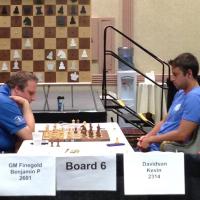
Quick summary for Kevin
Nice run — your recent rapid results are very strong (30–3–4 overall, consistent 2257 rating, strength-adjusted win rate ≈ 61%). You convert advantages and punish opponents who expose their king. Your openings (especially the Sicilian Defense: Najdorf Variation and Taimanov Variation) are paying dividends.
What you're doing well
- Opening preparation: High win rates in sharp Sicilian lines and good handling of dynamic positions — openings are working as a practical weapon.
- Tactical alertness: You exploit unprotected kings and loose pieces quickly; several wins came from quick tactical blows and infiltration.
- Conversion: When you gain the initiative you press and finish games decisively rather than letting chances slip.
- Consistency: Recent rating trend is stable and strong — you keep performing at the same level across months.
Recurring issues to fix
- King-safety technique vs flank pawns and early pawn storms — in a few games opponents tried to open lines against you on the kingside and you needed to be extra cautious before launching counterplay.
- Prophylaxis and slow improvement — you win tactics well, but sometimes could tighten up strategically to prevent counter-chances (for example, blunt opponent pawn advances before they get rolling).
- Time allocation in complex positions — keep a bit more time for critical tactical turns. You have good clock buffer but spend big chunks early and then face tricky moments with less reserve.
- Endgame practice — many wins finish before endgames, but polishing basic rook and pawn endings will help convert closer games more reliably.
Concrete next steps (two-week plan)
- Daily tactics: 12–18 mixed tactics/day (focus: forks, pins, discovered attacks, clearance/deflection motifs).
- Opening drills: 3 short study sessions on your main lines per week. Drill critical side-lines and typical tactical shots in the Sicilian Defense: Najdorf Variation and Taimanov Variation.
- Annotate 3 of your recent wins: write 4–6 notes per game (why each capture or piece move was played). That reinforces pattern memory.
- Endgame fundamentals: 2× 30-minute sessions on basic rook endings, Lucena position, and king+pawn v king conversions.
- One slow game (15+10 or longer) every 3 days to practice deeper planning and time distribution.
Pattern checklist (what to watch in-game)
- If the opponent pushes pawns toward your king (h/g/f pawns), ask: can I trade pieces or create luft for my king before the position opens?
- Before launching a pawn storm, secure the back rank and avoid leaving major pieces unprotected.
- Look for knight outposts on c5/d4/e5 — you convert these into tactics frequently; force exchanges that free these squares for your pieces.
- When you have the initiative, prefer simplifying into a winning endgame only when the path is clear — otherwise press with pieces and pawns on the board.
Example game — replay a recent win
Study this short successful tactical finish (good demonstration of central control, a knight jump into the opponent's position and decisive tactics):
After replaying it, note: the knight incursion to c7 and the timing of central breaks were key. Try to reproduce the plan in practice games.
Opponents to review
- Review your recent games vs mountainscott — opponent repeatedly allowed king exposure and you converted well; study how you forced queen checks and penetrations to replicate the method.
Final notes
You're playing very confidently and your repertoire is working. Focus the next few weeks on sharpening prophylaxis (preventing opponent counterplay), steadying time management in complex positions, and routine endgame drills. Keep the tactical practice up — it clearly yields wins for you.
If you want, I can prepare: (1) a 2-week personalized tactics set, (2) three model games in your Najdorf/Taimanov systems with commentary, or (3) annotated versions of two of your recent wins — tell me which option you prefer.