
Summary
Roman — nice cluster of clean wins recently and some instructive losses. Your opening choices show clear strengths (Closed Sicilian and King’s Indian stand out) but the last year shows a mild downward trend in rating (-24.7 over 12 months). Below are focused, practical steps to convert your strong ideas into consistently better blitz results.
What you're doing well
- High success with King's Indian Defense (win rate ~74%) — you get active counterplay and are comfortable in dynamic positions.
- Closed Sicilian results are excellent (~64%): you understand the typical pawn breaks and kingside plans in those positions.
- You create concrete tactical chances and aren't afraid to complicate — this is exactly what wins blitz games.
- Good conversion ability in winning games — multiple resignations by opponents indicate you press advantages until they crack.
Main areas to improve
- Time management in critical moments — several games show big clock swings. In 5+5 blitz, spend a bit more time on critical decisions early so you’re not scrambling later.
- Opening consistency: some lines (eg. Sicilian Defense: Taimanov Variation, American Attack and Sicilian Defense: Alapin Variation, Sherzer Variation) have sub‑50% win rates. Simplify your blitz repertoire toward lines you know by feel.
- Endgame technique and trade choices — in a few losses you traded into endings where the opponent’s activity or timing cost you the game (or you lost on time in otherwise playable positions).
- Tactical oversight under time pressure — reduce simple hanging pieces by improving quick-pattern recognition and a pause routine before each move.
Concrete, short-term plan (next 4 weeks)
- Daily: 15–20 tactical puzzles (5–10 minutes total). Focus on forks, pins, discovered attacks and mating nets — these recur in your games.
- 3× per week: 25–30 minutes of targeted opening rehearsal. Pick 2 primary blitz lines (one as White, one as Black) — keep them SIMPLE and deepen typical plan/structure rather than memorizing long theory.
- Weekly: annotate 3 of your recent losses (5–10 minutes each). For each, answer: what was my plan, when did it fail, what single change would improve the outcome?
- One weekend session: 1 hour of endgame drills — basic rook endgames, king + pawn vs king, and common tactical endgame patterns arising from your opening choices.
Practical blitz adjustments
- Adopt a two‑step move routine: (1) check opponent's last move threats, (2) check hanging pieces / single tactical motifs around your king and major pieces, (3) play. That 3‑second pause cuts many blunders.
- If you reach a known structure, play quickly (≤5s). Reserve time for first critical decision (pawn breaks, sacrifices, king safety changes).
- Simplify your repertoire for blitz: favor systems where you can rely on plans (e.g., Closed Sicilian and King's Indian Defense), and de-prioritize very theoretical sharp lines where one mistake is fatal in 5+5.
- Use the increment: in 5+5 you can safely take extra seconds if you manage the clock — practice converting small advantages with increment endgames (use online training matches with 5+5).
Opening study suggestions
- Keep exploiting King's Indian Defense — study 5 model games (grandmaster level) and extract two typical plans for the middlegame and a standard pawn break for each side.
- For the Sicilian Defense: Taimanov Variation, trim down sidelines. Pick a single reliable anti‑white setup and learn the 5 main move order traps that commonly occur in blitz.
- Fix the weakest line: QGD: 4.Bg5 Be7 5.cxd5 Nxd5 has a low win rate — spend one session on typical plans and a second on tactical motifs specific to that variation.
Training drills (examples you can start today)
- Tactics: 3×10 minute sessions — focus on pattern recognition (pins, skewers, forks).
- Familiarity: play 10 training blitz games with your simplified repertoire, then review the worst 3 positions with an engine to see recurring mistakes.
- Endgames: 15 minutes of rook endgames (Lucena, Philidor, rook + pawn vs rook fundamentals).
- Practical play: 2 rapid (15+10) games per week to practice deeper decision making without panic.
Post‑game routine (5–10 minutes)
- Quick self-check: identify one turning point and one blunder/missed tactic.
- Tag the game: “time trouble,” “opening unknown,” “tactical oversight,” etc. — use tags to focus practice.
- Once per week: run a light engine check on your tagged losses, but first try to find the refutation yourself for 3–5 minutes.
Data-driven takeaways
- Your overall Win/Loss/Draw record (712/478/124) shows solid practical strength — you win more than you lose in the long run.
- Strength‑adjusted win rate ~0.501 suggests you're performing about as expected vs comparable opposition — small improvements in time management and opening sanity will yield immediate rating gains.
- Recent trend: short-term slope is slightly negative; the 12‑month swing (-24.7) means refreshing fundamentals should restore and exceed previous peak form.
Quick next steps (this week)
- Pick two openings to keep for blitz (one as White, one as Black) and create a 30‑minute study sheet with typical pawn structures and two model games.
- Do the two‑step move routine in every blitz game for one week — track how many prevented blunders you get.
- Do 3×15 minute tactics sessions and one 60‑minute annotated review of your last 5 losses.
Study examples from your recent games
Here are two positions you can replay to study a win and a loss. Rewind, find the turning moment, then compare your idea with engine and with the short checklist above.
- Recent win (play through a decisive middlegame sequence):
- Recent loss (practice the pause routine in the sharp middlegame):
Open the sequences, stop before each candidate move and run the two‑step routine. Note which moves you would change.
Closing — stay practical
Your foundation is strong: good opening choices, good conversion, and a lot of practical experience. A short, disciplined training cycle focused on time management, a simplified blitz repertoire, and targeted tactics/endgame drilling will convert the current downward wobble into a renewed upward trend. If you want, I can build a 4‑week calendar (with daily exercises and specific puzzles) tuned to the openings you prefer — tell me which two openings you want to prioritize.
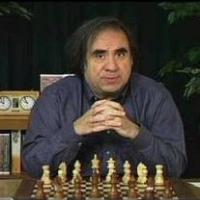
Profile: Roman Dzindzichashvili