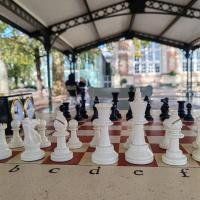
Highlights from your recent blitz games
You showed good willingness to enter tactical, dynamic positions and carried momentum into the middlegame. In the most recent win, you created pressure on the opponent’s king with active piece play and completed the attack with a forcing sequence that ended in checkmate. This demonstrates you can spot tactical ideas and convert them when your opponent overextends.
- Developing pieces efficiently and getting your king safely castled early helps you keep threats alive while you complete development.
- When you coordinate knights and bishops on active diagonals or squares, you can create concrete threats that force your opponent to respond rather than improvise.
- Your willingness to complicate positions in blitz can pay off when you spot forcing moves and tactical motifs around the enemy king.
Key improvements to focus on
- King safety in sharp lines: In blitz, an aggressive attack against your opponent’s king is powerful, but be mindful of back-rank and queen checks. If you don’t see a clear continuation, consider consolidating by completing development and aiming to neutralize immediate threats.
- Balance between attack and consolidation: The mate sequence shows strong calculation, but also that a single imprecise moment can turn the position. Practice evaluating whether a tactical line truly wins material or a forced mate, and when it’s safer to simplify.
- Time management under pressure: In fast games, build a quick routine for the first 8–12 moves (development, king safety, and reasonable plans). When your clock is tight, prioritize solid, practical moves over overly speculative tactics unless you’re confident in the line.
- Opening discipline: You’ve demonstrated versatility with several openings. In blitz, it helps to pick 1–2 reliable setups and learn the typical middlegame plans and pawn structures you’re aiming for, so you can decide on a plan quickly after the opening.
Practical drills and a focused practice plan
- Daily tactical puzzles focusing on mating nets and forcing sequences to improve calculation speed and pattern recognition for blitz.
- Two-step planning drill: pick a 1–2 opening ideas you enjoy (for example, those that lead to open lines and active piece play) and study the main middlegame plans for those lines. Use a quick-reference cheat sheet with 2–3 core plans per opening.
- Time-boxed play: practice short 5+0 or 3+2 blitz sessions while consciously applying a simple opening plan and aiming to reach a solid middlegame by move 15–20.
- Post-game reviews: after each blitz session, quickly note 1–2 decision points where you could have kept or improved your initiative, and 1 defensive resource you missed or could have prepared for.
Opening focus notes
Your results show activity in lines related to Italian-style setups and other sharp lines. To sharpen blitz performance, consider concentrating on 1–2 openings and building a compact middlegame plan around them. For example, you could deepen your understanding of a Giuoco Piano family approach to anticipate typical king-side attacks and common counter-chances. You can review specific lines and ideas here: Giuoco-Piano-Game and examine how top players handle similar structures. Also, it can be helpful to study how your recent opponents approach these openings and what tactical motifs they try to employ. If you want, you can share a recent opponent’s profile for quick study: Leeloouu.
Next steps and quick goals
- Choose 1–2 openings to mainline in blitz and build a short, practical plan for the middlegame so you can decide on a course of action quickly after the opening phase.
- In a typical blitz session, aim to reach a solid middlegame by move 15 and then focus on concrete plans rather than long, speculative lines.
- Keep a small set of safe, reliable responses to common tactical threats and practice using them under time pressure.