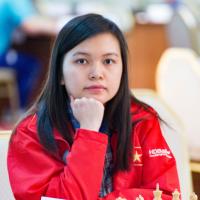
Feedback for Nguyen Thi Mai Hung (ntmh281)
What you’re already doing well
- Consistent opening strategy. Your Queen’s-Pawn + g3 systems and the French Defence as Black give you structurally sound positions and keep you in familiar pawn-structures.
• Game vs terrryy16 shows excellent use of the Nd5 outpost and centralisation (9 Nd5!, 11 Rd1!) leading to a long-term space plus initiative.
• In several wins you demonstrated the classic “pressure–liquidate–convert” model: trade into a better endgame and push the passed pawn (e.g. 40 exf5–46 Qg8#). - Tactical alertness under pressure. Sequences like 24 Bxd6+!! (removing the defender) and 45 f8=Q+! illustrate that you calculate forcing lines accurately when the clock is low.
- Psychological resilience. After a string of time-losses on 24 May you immediately bounced back with a clean mating attack the same afternoon—a good competitive mindset.
Main areas to improve
- Time management.
Five of your last six defeats were “lost on time” with playable or even favourable positions. Try the 30-30-40 rule: aim to keep
• 70 % of your time for moves 1-15 (opening familiarity = quick moves),
• 20 % for moves 16-30 (critical middlegame), and
• 10 % for the conversion phase.
A physical cue—tap the clock with your off-hand before each calculation—often prevents drifting into deep thought early. - Handling counter-play in the French Defence.
The loss against pronesss featured …f6 and …c6 ideas from your opponent that undermined your centre. Study the Classical French in the Delayed-Exchange line; specifically rehearse positions after 10 Bg5 f6 11 Bh4 Nb6 to ensure you know when to challenge with …e5 or reroute the knight to d6. - Piece coordination in the Slav/Colle structures.
Against euphoria_chess the manoeuvre …Bc2–…Bb3 distracted your rooks and allowed …Rc5–…Rac8 doubling. When playing against …Bf5 and …c5 remember the thematic break dxc5 followed by e4 only works if the c-file is firmly controlled. A quick prophylactic Re1 and Nf1–g3 preventing …Bh7 is often smoother. - Endgame confidence.
The game vs usukak10 reached an equal rook-and-pawn endgame but you flagged while manoeuvring. Drill the “two-rook vs rook” and “rook behind the passed pawn” endings so you can trust your reflexes and save time.
Suggested study plan (next 4 weeks)
| Week | Main Goal | Concrete Task |
|---|---|---|
| 1 | Opening speed | Write a one-page “cheat-sheet” for each of your main lines; spend 15 minutes/day playing opening-only sparring games. |
| 2 | Typical tactics | 40 puzzles/day filtered for French & Slav pawn-structures; prioritise motifs: interference, zwischenzug, and Zugzwang. |
| 3 | Endgame muscle-memory | Use the Nalimov set or Lichess Drill: finish 100 rook-vs-rook + pawn endings with a 15-second increment. |
| 4 | Clock discipline | Play 20 blitz games where you must move within 10 seconds for the first 12 moves; review only time usage, not result. |
Diagnostic charts
For a quick visual of when you play best, review:
•
• – note the spike on Wednesdays; maybe align training games there.
Key stats
Your historical best: 2538 (2024-06-16). Target: +35 points by end of next quarter.
Inspirational moment
Replay your recent miniature for motivation:
Next steps
Implement the week-by-week plan, keep the clock discipline drills, and touch base after 50 blitz games for a fresh review. Small, consistent improvements will push you well past the 2350 mark.
Good luck, and see you at the board!