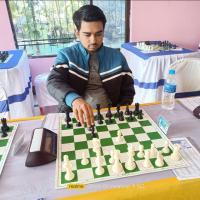
Hi Sudhanshu!
You are already competing at an impressive level (≈), and the sample of recent games shows a creative, well-prepared player who is not afraid of dynamic positions. Below is an objective assessment of your current play and a roadmap for further improvement.
1. What is working well
- Opening versatility. In the last 10 games you handled the King’s Indian, Nimzo-Indian, Slav, Caro-Kann and Sicilian from both sides, often reaching the middlegame with a sound structure and a small time lead.
- Dark-square mastery. Your win against scorbion55 featured 11…c5! and 16…Nxc4!, seizing the d3–e4 complex and carrying that advantage into the endgame.
- Endgame stamina. Long technical wins vs Fox1397 and WhoIsKenya1 show you can grind equal rook endings even with very little time left.
- Practical fighting spirit. The placeholder would show that you collect many points in late-night sessions where tired opponents flag in worse positions—good use of the clock as a weapon.
2. Main improvement themes
-
Tactical alertness once the position opens.
In your recent QGA loss you entered a tactical sequence without calculating the back-rank motif (23.Rc8+ winning).
Critical fragment:
Action: 20 min/day of timed puzzle rush + slow calculation drills (no board, 3-5 minutes / position). Focus on fork & back-rank patterns and Zwischenzug opportunities. -
King safety in opposite-side castling.
In the Nimzo-Indian (0-1 vs aungko12345678) you castled long then advanced the h- and a-pawns quickly. After 24…Qc5 your king was exposed and 29…Qxd3+ started the collapse.
Action: When kings are on opposite wings adopt the “three-move rule”: before pushing a wing pawn, list at least three concrete defensive moves for your own king. -
Conversion speed.
Many wins arrive on time rather than on the board. Faster, cleaner conversions will raise rating and confidence.
Action: 1) Practise up-material bot sparring (e.g. R+P vs R) limited to 60 seconds/move. 2) Annotate your own winning positions and write down a single plan in 30 seconds—train deciding, not calculating forever. -
Clock handling in lost positions.
In several defeats you resigned with 7-8 minutes left and plenty of complications on the board. Use that reserve to hunt practical chances.
Action: Play one training game per week where you must continue until checkmate or flag—no resignations. Review the resource you eventually found (or missed).
3. Opening checklist
| Line | Keep / Tweak | Focus idea |
|---|---|---|
| King’s Indian vs Fianchetto | Keep | Memorise the Bf5-Nc4 plan you used so well; test it vs engines at depth 20 to add tactical details. |
| Nimzo-Indian 4.Qc2 | Tweak | Add 6…d5 main line to meet early e4 pushes; current 6…b6 setup led to cramped play. |
| QGA Central Variation (as Black) | Repair | Learn the safe 6…exd4 & …Be7 scheme; avoid early …Bb4 without c6 which allowed the Rc8 tactic. |
4. 30-day action plan
- Puzzles: 20 min/day tactical themes; review failures immediately.
- Game quota: 10 rapid games/week → annotate two wins & every loss the same day.
- Endgames: Three rook-pawn vs rook studies weekly (check with tablebase after self-analysis).
- Physical routine: Two 5-minute breaks during long sessions—stand, stretch, reset focus.
5. Motivation corner
Your rating graph has climbed roughly 150 points in the last quarter. Consolidate the tactical and defensive fixes above and the next plateau (2500+) is well within reach.
Good luck, train hard, and enjoy the process!
—Coach Bot
Need a quick refresher on any term? Try Prophylaxis or Candidate Move.