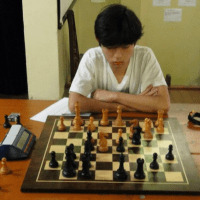
Teidi96: A Journey in Modern Chess
Emerging onto the chess scene in 2015 with humble beginnings—a Daily rating of 1200 and a promising Blitz score of 1909—Teidi96 has since evolved into a formidable force on the board. Over the years, his ratings have steadily climbed across multiple time controls, reflecting a deep commitment to improving his craft. By 2017 his blitz rating had surged to 2239, and his journey continued with rapid and bullet formats gaining momentum as well.
Known for his comprehensive understanding of the game, Teidi96 has honed a playing style that leans on meticulous endgame study and an extensive opening repertoire. With an endgame frequency surpassing 84% and an average game length in wins and losses hovering in the low 80s moves, his matches demonstrate a balance between patience and calculated aggression. His performance with both the white and black pieces—boasting win rates of 49.2% and 44.52% respectively—illustrates a versatility that few can match.
What sets Teidi96 apart is not only his technical acumen but also his remarkable psychological resilience. Sporting a comeback rate exceeding 91% and an impressive ability to salvage games even after material setbacks, he epitomizes the spirit of a true competitor. His tilt factor remains modest at 13, underscoring a steady composure amid the pressure of high-stakes play.
His journey through the years is marked by steady growth; from his initial ratings in 2015 to reaching a Daily peak of 1695 and a Rapid milestone of 2326 in 2024, every step of his progression speaks of dedication, intense training, and a willingness to explore diverse strategies. Teidi96’s rigorous analysis of his opening performance and his tracking of time and tactical trends reveal a modern approach to chess—one where statistics and psychology intertwine to shape a unique competitive identity.
With notable winning streaks (a record of 41 consecutive wins and a current streak of 4) and a performance that adapts to varying time controls and opponents, Teidi96 represents the evolving art of chess mastery in the digital age—a player who continuously refines his style and challenges both himself and his adversaries.
Whether scrutinizing the subtleties of the Scandinavian Defense or navigating complex endgame positions, Teidi96 inspires fellow enthusiasts with his journey from modest beginnings to becoming a well‐rounded, deeply analytical chess force.
Overview of your recent rapid games
You have shown clear fight and practical decision‑making in your recent rapid games. The latest win demonstrates you can maintain pressure through midgame complexity and convert initiative into a concrete, time‑based victory. You also show comfort in sharp, dynamic openings. To keep building, focus on smoothing midgame transitions and refining endgame technique to lock in advantages more consistently.
What you do well
- Imposing pressure and tactical feel: You create active, forcing lines that test your opponent’s defenses and generate practical winning chances.
- Comfort in dynamic openings: You handle sharp, modern defenses with good piece coordination, especially in lines like the Closed Sicilian and Accelerated Dragon families.
- Endgame tenacity: In longer games you keep pressing and convert small advantages into real wins, often when the opponent is under time pressure or under heavy tactical constraints.
- Time management in long games: Finishing a lengthy game on time shows strong stamina and focus in late stages.
Areas to improve
- Midgame transitions: After the opening, sharpen the plan quickly. Define a clear target structure or weakness to attack and avoid over‑extending into chasing tangles.
- Endgame technique: Practice converting advantages into clear promotions or material gains in rook and minor‑piece endings. Build a simple, repeatable method for handling common endgames (such as rook endings with active king and pawn breaks).
- Consistency against solid defenses: When opponents aim for solid setups, work on recognizing typical pawn breaks and piece maneuvers that keep pressure without overcommitting.
- Pattern recognition and blunder avoidance: Regular, focused tactic drills can reduce rare miscalculations in complex positions and help you spot forcing sequences earlier.
Opening performance snapshot
Your openings show strong results in several dynamic lines, with particular strength in certain aggressive setups. Here are notable highlights from your recent performance:
- Blackburne Shilling Gambit: 6 games, 6 wins, 0 losses, 0 draws — 100% score
- Sicilian Defense: Closed: 3 games, 3 wins — 100% score
- Sicilian Defense: Accelerated Dragon, Exchange Variation: 3 games, 3 wins — 100% score
- Scotch Game: 3 games, 2 wins — 66.7% score
- Sicilian Defense: Najdorf Variation: 3 games, 2 wins — 66.7% score
- Sicilian Defense: Alapin Variation (and Sherzer Variation): 4 games, 2 wins, 2 losses, 0 draws — 50% win rate
- Sicilian Defense: Alapin Variation: 3 games, 2 wins, 0 losses, 1 draw — 66.7% win rate
- Döry Defense: 2 games, 1 win, 1 loss — 50% win rate
- Caro-Kann Defense: Classical Variation: 2 games, 1 win, 1 loss — 50% win rate
What this suggests: you perform best when you can steer the game into sharp, tactical lines where your piece activity and calculation give you practical winning chances. Consider building a concise two‑to‑three opening set you rely on in most rapid events, while keeping a few flexible alternatives ready for unexpected responses. For quick reference, you might explore Sicilian Defense: Closed and Sicilian Defense: Accelerated Dragon as core pillars, with a secondary option like the Scotch Game for surprise value.
For quick reference to openings and ideas, you can also review your current repertoire notes via danielteidiawoki.
Strategy notes and improvement plan
- Focus area 1: Endgame clarity. Allocate 15–20 minutes per training session to rook endings and king activity drills. Practice converting small material edges into a win in simple rook endings.
- Focus area 2: Middlegame plans. After the opening, commit to a concrete plan (for example, target a specific pawn break or space advantage) by move 15 in most games you play. If the plan is unclear, simplify to safer exchanges to maintain the initiative.
- Focus area 3: Pattern recognition. Regular tactical puzzles (10–15 per day) with emphasis on identifying forcing sequences and common sacrifice motifs that arise in your favorite openings.
- Focus area 4: Time‑control discipline. Continue using your strong stamina, but balance pace so you’re not relying on last‑minute decisions. A quick pre‑move framework can help you avoid time pressure in tricky middlegames.
Next steps and practice plan
- Adopt a two‑opening core: pick one aggressive Sicilian line (e.g., Closed or Accelerated Dragon) and one solid, flexible option (e.g., Alapin or Scotch) for the majority of rapid games this month.
- Daily drill: 20 minutes of tactical puzzles focusing on forcing moves, followed by a 15‑ to 20‑minute review of two recent rapid games to identify where midgame plans could have been tighter.
- Weekly review: Re‑play one of your recent long games with engine‑free notes, focusing on where a different plan might have improved the final result.
- Practical training: In at least two sessions, play a long game with commentary afterward, explaining your decision points aloud. This will improve your ability to translate plan into moves under time pressure.
Profile quick reference: danielteidiawoki
🆚 Opponent Insights
| Recent Opponents | ||
|---|---|---|
| nh0532300 | 1W / 0L / 0D | View |
| openingscientist | 1W / 0L / 0D | View |
| carlseng | 2W / 1L / 0D | View |
| iozcoach | 0W / 1L / 0D | View |
| radioriddles | 2W / 3L / 2D | View |
| trendbold | 0W / 1L / 0D | View |
| wmcus_sebastian | 0W / 1L / 0D | View |
| vahemendelyan | 3W / 4L / 2D | View |
| 0_starkiller_0 | 1W / 0L / 0D | View |
| coach_alberto | 1W / 0L / 0D | View |
| Most Played Opponents | ||
|---|---|---|
| indiobrasileiro | 100W / 104L / 16D | View Games |
| Daniel Rangel | 41W / 79L / 16D | View Games |
| Raffael Chess | 43W / 47L / 9D | View Games |
| sleepless_knightmare | 36W / 50L / 6D | View Games |
| Ogueko | 80W / 0L / 0D | View Games |
Rating
| Year | Bullet | Blitz | Rapid | Daily |
|---|---|---|---|---|
| 2025 | 2311 | 2422 | 2335 | 1703 |
| 2024 | 2218 | 2339 | 2326 | 1679 |
| 2023 | 2305 | 2454 | 1651 | |
| 2022 | 2216 | 2415 | 1490 | |
| 2021 | 2341 | 2361 | 2315 | 1376 |
| 2020 | 2351 | 2369 | 2274 | |
| 2019 | 2019 | 2190 | 2041 | |
| 2018 | 2088 | 2110 | 2004 | |
| 2017 | 1986 | 2239 | ||
| 2015 | 1909 | 1200 |
Stats by Year
| Year | White | Black | Moves |
|---|---|---|---|
| 2025 | 545W / 451L / 85D | 533W / 455L / 90D | 84.2 |
| 2024 | 774W / 578L / 131D | 705W / 663L / 102D | 85.2 |
| 2023 | 1170W / 888L / 175D | 1051W / 996L / 181D | 85.4 |
| 2022 | 886W / 958L / 152D | 810W / 1068L / 137D | 84.4 |
| 2021 | 1248W / 1247L / 173D | 1126W / 1334L / 192D | 85.3 |
| 2020 | 1681W / 1363L / 249D | 1467W / 1623L / 220D | 84.5 |
| 2019 | 712W / 605L / 122D | 700W / 653L / 90D | 82.8 |
| 2018 | 879W / 901L / 156D | 825W / 1016L / 147D | 82.7 |
| 2017 | 444W / 361L / 46D | 391W / 419L / 46D | 81.3 |
| 2015 | 17W / 7L / 0D | 17W / 7L / 2D | 84.6 |
Openings: Most Played
| Blitz Opening | Games | Wins | Losses | Draws | Win Rate |
|---|---|---|---|---|---|
| Sicilian Defense: Alapin Variation | 1838 | 891 | 771 | 176 | 48.5% |
| Sicilian Defense: Alapin Variation, Sherzer Variation | 1008 | 470 | 486 | 52 | 46.6% |
| Sicilian Defense: Closed | 845 | 358 | 422 | 65 | 42.4% |
| Blackburne Shilling Gambit | 809 | 414 | 342 | 53 | 51.2% |
| Alekhine Defense | 804 | 416 | 342 | 46 | 51.7% |
| Modern Defense: Pterodactyl Variation | 790 | 357 | 389 | 44 | 45.2% |
| Sicilian Defense: Najdorf Variation | 752 | 317 | 382 | 53 | 42.1% |
| Czech Defense | 698 | 336 | 313 | 49 | 48.1% |
| Scandinavian Defense | 646 | 315 | 286 | 45 | 48.8% |
| Caro-Kann Defense | 595 | 297 | 255 | 43 | 49.9% |
| Bullet Opening | Games | Wins | Losses | Draws | Win Rate |
|---|---|---|---|---|---|
| Amar Gambit | 123 | 58 | 62 | 3 | 47.1% |
| Alekhine Defense | 114 | 53 | 53 | 8 | 46.5% |
| Czech Defense | 98 | 53 | 42 | 3 | 54.1% |
| Scandinavian Defense | 85 | 44 | 38 | 3 | 51.8% |
| Sicilian Defense: Alapin Variation | 84 | 42 | 37 | 5 | 50.0% |
| Sicilian Defense | 83 | 41 | 38 | 4 | 49.4% |
| Caro-Kann Defense | 68 | 41 | 26 | 1 | 60.3% |
| Nimzo-Larsen Attack | 66 | 31 | 31 | 4 | 47.0% |
| French Defense | 64 | 26 | 30 | 8 | 40.6% |
| Sicilian Defense: Alapin Variation, Sherzer Variation | 64 | 28 | 35 | 1 | 43.8% |
| Daily Opening | Games | Wins | Losses | Draws | Win Rate |
|---|---|---|---|---|---|
| Alekhine Defense | 6 | 4 | 1 | 1 | 66.7% |
| Sicilian Defense | 4 | 4 | 0 | 0 | 100.0% |
| Alekhine Defense: Modern Variation | 3 | 2 | 1 | 0 | 66.7% |
| English Opening: Anglo-Indian Defense | 3 | 3 | 0 | 0 | 100.0% |
| Amar Gambit | 3 | 3 | 0 | 0 | 100.0% |
| Catalan Opening: Closed | 2 | 2 | 0 | 0 | 100.0% |
| Scotch Game | 2 | 2 | 0 | 0 | 100.0% |
| Blackburne Shilling Gambit | 2 | 2 | 0 | 0 | 100.0% |
| Amazon Attack: Siberian Attack | 2 | 1 | 0 | 1 | 50.0% |
| Sicilian Defense: Alapin Variation | 2 | 1 | 0 | 1 | 50.0% |
| Rapid Opening | Games | Wins | Losses | Draws | Win Rate |
|---|---|---|---|---|---|
| Blackburne Shilling Gambit | 6 | 6 | 0 | 0 | 100.0% |
| Sicilian Defense: Taimanov Variation, Bastrikov Variation | 4 | 2 | 1 | 1 | 50.0% |
| Sicilian Defense: Alapin Variation, Sherzer Variation | 4 | 2 | 2 | 0 | 50.0% |
| Sicilian Defense: Closed | 3 | 3 | 0 | 0 | 100.0% |
| Scotch Game | 3 | 2 | 1 | 0 | 66.7% |
| Sicilian Defense: Najdorf Variation | 3 | 2 | 1 | 0 | 66.7% |
| Sicilian Defense: Alapin Variation | 3 | 2 | 0 | 1 | 66.7% |
| Sicilian Defense: Accelerated Dragon, Exchange Variation | 3 | 3 | 0 | 0 | 100.0% |
| Döry Defense | 2 | 1 | 1 | 0 | 50.0% |
| Caro-Kann Defense: Classical Variation | 2 | 1 | 1 | 0 | 50.0% |
🔥 Streaks
| Streak | Longest | Current |
|---|---|---|
| Winning | 41 | 3 |
| Losing | 13 | 0 |