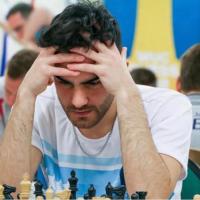
Julio Benedetti is a titled International Master from FIDE and a popular streamer who goes by the handle AjedrezJulben. He blends deep preparation with fast, entertaining play, making Blitz and Bullet sessions both instructional and addictive for his listeners.
Chess Career and Style
As a steady returner to top-level blitz, Julio reached a peak Blitz rating of 2656 in May 2023. He favors sharp, proactive openings—particularly the Sicilian Defense (Closed and Cobra variations) and the Giuoco Piano family—combined with strong endgame sense. His games across Blitz, Bullet, and Rapid show a fearless willingness to complicate positions and out-calculate opponents under time pressure.
Streaming and Community
Streaming under the name AjedrezJulben, he shares live games, openings exploration, and post-game insights. His relaxed bite-size lessons and daring play have built a loyal community that enjoys both the humor and the hard analysis. Julio Benedetti
Openings Spotlight
His Blitz and Bullet openings performance highlights a strong affinity for Sicilian structures and related lines, with notable success in Four Knights Cobra, Giuoco Piano, and other aggressive setups. He routinely combines tactical pressure with practical endgames, keeping opponents guessing and viewers entertained.
Coach Chesswick
Overview of your recent blitz play
Julio, you show a strong willingness to enter sharp, tactical middlegames where you can press for initiative. Your aggressive choices in the Sicilian-related lines and your willingness to complicate the position can put opponents under real pressure. At the same time, blitz games highlight the need for clean calculation under time pressure and solid endgame technique. A few recent games illustrate both the exciting possibilities and the risks when the position becomes chaotic or when defenses aren’t solidified early.
What you’re doing well
Initiative and tactical awareness: You are comfortable stepping into complex positions and finding forcing sequences that exploit imbalances in the position.
Aggressive opening choices: Your willingness to play active lines in the Sicilian family shows you are trying to seize the momentum from the start rather than passively choosing passively safer lines.
Resilience in dynamic positions: Even when the position becomes tactical, you keep fighting for practical chances, which is essential in blitz.
Areas to improve (practical, actionable)
Time management under pressure: In blitz, the clock can swing a position just as much as the board. Build a routine to guard against time trouble.
- Practice a steady pace: aim to have a basic plan for the first 10 moves, then switch to more concrete calculation as you approach the middle game.
- Use a simple heuristic: if you spend more than a small fixed window on a single critical decision, switch to safer, more straightforward moves and come back to deeper calculation later if time allows.
Endgame conversion: A few losses show how quickly a win materializes into a tense endgame. Strengthen rook endgames and basic king activity patterns so you can convert even small advantages cleanly.
- Drill short rook endings (rook vs rook with pawns on opposite wings) and queen endings with minimal material to solidify technique under time pressure.
Defensive prophylaxis: In fast games, you can get caught by sudden threats. After every move, quickly identify the most forcing response your opponent could have and compare it to your plan.
- Practice a habit of scanning for back-rank threats, loose pieces, and attacks against your king before committing to an aggressive plan.
Pattern-based opening planning: Your openings show readiness to fight, but a concrete plan after the opening helps in blitz.
- Pick 2–3 main lines you’re comfortable with and develop a concise middlegame plan for each. Keep a short checklist of typical pawn breaks and piece maneuvers for those lines to guide you when you’re low on time.
Calculation discipline: In sharp games, you’ll encounter multiple forcing lines. Strengthen your ability to verify a critical line before committing to a sequence.
- Integrate 2–3 reliable tactical motifs into your training routine (forks, pins, skewers, and back-rank motifs) and practice recognizing them in practical positions.
Recommended 2-week micro-plan
Daily tactical training (20–30 minutes): focus on puzzles that emphasize forcing lines and common tactical motifs you encounter in blitz.
Endgame clinic (2–3 sessions per week, 20 minutes): practice rook endings and simple queen endings to improve conversion skills.
Opening refinement (15–20 minutes per day): choose 2–3 openings you use most and build a short, practical plan for the middlegame in each one.
Game review (post-blitz, 15 minutes): annotate two recent games to identify where you spent time, where you missed a simpler move, and where you could have simplified to a favorable ending.
Time management drill (weekly): play mini-blitz sessions with a fixed, short time control (e.g., 3+2 or 4+2) and push for maintaining a steady pace while making solid moves.
Openings focus and practical plan
Openings you’ve used show strong potential when you reach dynamic middlegames. To turn that into consistent gains, consider the following:
Choose 2–3 trusted themes: continue with the aggressive Sicilian-related lines that suit your style, but pair them with a reliable, less risky option for black when needed to avoid overtaxing the brain in rapid time controls.
Build a compact middlegame plan for each chosen line, including typical pawn breaks and target squares for your pieces. This reduces decision fatigue and helps you stay on a clear path when the clock is ticking.
Prepare concrete prophylaxis ideas: after your opponent’s typical responses, have one or two standard responses ready that neutralize main threats. This improves your resilience in the opening and early middlegame.
Encouragement and next steps
You have sharp, creative instincts that can be a real edge in blitz. By tightening time management, reinforcing endgame technique, and building focused opening plans, you can convert more of your aggressive middlegame pressure into decisive results. Stay curious, keep annotating your games, and use quick, structured post-mortems to reinforce good decisions and correct missteps.