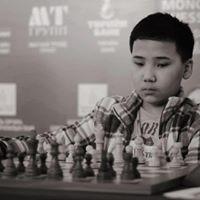
Amartuvshin Ganzorig - International Master Extraordinaire
If chess were an Olympic sport, Amartuvshin Ganzorig would certainly be on the podium—preferably standing on the highest one, International Master medal in hand. A player who courts complexity and thrives in the lightning-fast world of blitz and bullet chess, Ganzorig is known for turning the heat up on their opponents with a remarkable peak blitz rating soaring nearly to 2700. That's right—this isn't just a casual checkers player switching to chess this weekend!
Since entering the arena in 2017, Amartuvshin has played over 300 blitz games, winning about 62% of them. But don’t be fooled by the speed—these are thoughtful, tactically sharp battles with an astonishing 81.5% comeback success rate even after losing a piece. They also show impressive nerves of steel with a tilt factor of just 7, proving that when the going gets tough, Amartuvshin gets tactical.
Known for a "Top Secret" opening repertoire (shhh!), Ganzorig has mastered the art of surprising opponents in casual zombies mode and rated battles alike, boasting win rates north of 60% across blitz, bullet, rapid, and even daily chess. The numbers say it all: a longest winning streak of 36 games, and an average game length nearing 75 moves, revealing a refusal to let opponents off the hook easily.
But the story isn’t just about the wins. Even in losses, Amartuvshin fights gallantly—losing streaks are brief and pain is quickly turned into progress. And if their most recent wins are any indication, resignations are the polite way out for those facing Ganzorig’s steady onslaught.
When’s the best time to catch this chess maestro at their peak? Around 9 AM, when focus and energy align to produce those scintillating moves. Beware: their win rates hover near 77% during prime morning hours, so if you’re lining up as an opponent, maybe grab a strong coffee first.
Off the board, Amartuvshin Ganzorig might just be your friendly neighborhood player, but on it, they're a relentless strategist, a comeback king, and a force melding speed with precision. International Master? More like International Checkmate Artist.
Overview of your blitz play
You show a strong, aggressive mindset in blitz. Your results indicate you do well when the game opens in dynamic, tactical frames and you’re comfortable entering sharp positions that reward accurate calculation. Your openings reflect a willingness to take the initiative, which is a big asset in fast games. With some focused refinements, you can turn the momentum from recent rating gains into lasting improvement.
What you’re doing well
- Preference for sharp, tactical openings that put opponents under immediate pressure, leading to practical winning chances in many games.
- Good conversion in aggressive lines (for example, you’ve had strong results with bold setups like the Amar Gambit and King’s Indian family lines).
- Ability to maintain activity and to fight back in complex positions, which is a strong trait in blitz where quick, accurate calculation matters.
Areas to improve
- Time management under pressure: there are moments where long, deep calculations in critical moments can leave you short on time later in the game. Practice a faster initial assessment in the opening and middlegame to keep a comfortable clock.
- Endgame conversion: in some closes games, simplifying or converting small advantages to wins can slip if you’re not precise about practical plans in reduced material. Sharpen rook and minor piece endgames and common zugzwang patterns.
- Consistency across a wider opening set: you perform exceptionally in certain aggressive lines, but you’ll benefit from a compact, reliable 2-3 move knowledge base for each opening to avoid getting caught in unfamiliar ideas.
Opening insights from your current results
- Your strongest results come from aggressive, tactical repertoires (notably the Amar Gambit and key King’s Indian Orthodox lines). Lean into those when you’re confident with the plan, as they tend to maximize blitz winning chances.
- You also perform solidly in several structural openings like Slav Defense and certain Sicilian variations, suggesting you can handle both symmetric structures and dynamic pockets of play.
- To reduce risk in blitz, maintain a core set of 2-3 openings for White and 2-3 for Black, with clearly defined middlegame plans. This keeps your play tight and less prone to big, unforced errors in time trouble.
Targeted training plan
- Short, daily tactics sprint: 15 minutes of rapid-fire puzzles to improve speed and pattern recognition, 3–5 per session focusing on common tactical motifs you encounter in blitz.
- Opening repertoire refinement: solidify 2–3 lines for White and 2–3 lines for Black. For each line, note 2 clear middlegame plans and 2 typical endgame transitions so you can stay in control even after the first mistakes.
- Post-game review routine: after every blitz game, write a 1–2 sentence note about the key turning point, what you could have done differently, and the main lesson to carry forward.
- Endgame practice: dedicate 1–2 sessions per week to rook and pawn endings and simple minor-piece endings so you can convert small advantages reliably.
- Clock discipline drills: in practice games, set a rule to move within a fixed time window for the first 15–20 moves (for example, never spend more than 1 minute on a standard position until you reach a realistic key moment). This builds steady pacing for live games.
Practical reminders for blitz
- Keep your openings practical and goal-oriented. Memorize typical middle-game ideas rather than staying paralyzed by endless possibilities.
- When you feel under time pressure, switch to a safe plan that minimizes risk and keeps you active—prioritize developing pieces, coordinating threats, and avoiding obvious blunders.
- Balance ambition with restraint: while aggressive play wins many games, know when to simplify to a clean endgame where your practical chances remain high.
🆚 Opponent Insights
| Most Played Opponents | ||
|---|---|---|
| odreamchess | 14W / 11L / 5D | View Games |
| garid_og | 9W / 0L / 0D | View Games |
| Uurtsaikh Agibileg | 1W / 4L / 3D | View Games |
| Gan-Erdene Sugar | 4W / 3L / 0D | View Games |
| Thaddaeus ter Meer | 3W / 2L / 0D | View Games |
Rating
| Year | Bullet | Blitz | Rapid | Daily |
|---|---|---|---|---|
| 2025 | 2655 | 2663 | ||
| 2024 | 2651 | 2593 | ||
| 2023 | 2540 | 2572 | 2188 | |
| 2022 | 2525 | 2188 | ||
| 2021 | 2365 | 2410 | ||
| 2020 | 2409 | 2466 | 2338 | |
| 2019 | 2142 | 2418 | 1252 | |
| 2018 | 2121 | 2297 | ||
| 2017 | 2174 | 800 |
Stats by Year
| Year | White | Black | Moves |
|---|---|---|---|
| 2025 | 25W / 14L / 2D | 19W / 17L / 6D | 72.7 |
| 2024 | 27W / 3L / 5D | 19W / 16L / 2D | 88.8 |
| 2023 | 56W / 21L / 5D | 47W / 29L / 1D | 81.1 |
| 2022 | 4W / 2L / 0D | 3W / 3L / 0D | 73.4 |
| 2021 | 2W / 3L / 0D | 3W / 1L / 1D | 80.3 |
| 2020 | 24W / 12L / 4D | 24W / 12L / 5D | 83.1 |
| 2019 | 27W / 16L / 1D | 34W / 9L / 2D | 60.4 |
| 2018 | 35W / 22L / 1D | 38W / 20L / 4D | 79.2 |
| 2017 | 21W / 5L / 1D | 22W / 4L / 1D | 75.3 |
Openings: Most Played
| Bullet Opening | Games | Wins | Losses | Draws | Win Rate |
|---|---|---|---|---|---|
| Amar Gambit | 26 | 16 | 8 | 2 | 61.5% |
| Australian Defense | 20 | 15 | 5 | 0 | 75.0% |
| Barnes Defense | 17 | 8 | 8 | 1 | 47.1% |
| Colle System: Rhamphorhynchus Variation | 10 | 6 | 4 | 0 | 60.0% |
| Nimzo-Larsen Attack | 8 | 5 | 3 | 0 | 62.5% |
| QGD: 3.Nc3 Nf6 4.e3 | 7 | 6 | 1 | 0 | 85.7% |
| Caro-Kann Defense | 6 | 5 | 1 | 0 | 83.3% |
| Slav Defense: Alekhine Variation | 6 | 3 | 3 | 0 | 50.0% |
| Amazon Attack | 5 | 3 | 2 | 0 | 60.0% |
| Slav Defense | 5 | 3 | 2 | 0 | 60.0% |
| Blitz Opening | Games | Wins | Losses | Draws | Win Rate |
|---|---|---|---|---|---|
| King's Indian Defense: Orthodox Variation | 16 | 13 | 3 | 0 | 81.2% |
| Slav Defense | 12 | 8 | 4 | 0 | 66.7% |
| Sicilian Defense: Alapin Variation, Sherzer Variation | 11 | 7 | 3 | 1 | 63.6% |
| Sicilian Defense: Taimanov Variation | 10 | 7 | 3 | 0 | 70.0% |
| Amazon Attack: Siberian Attack | 9 | 6 | 2 | 1 | 66.7% |
| King's Indian Defense: Orthodox Variation, Aronin-Taimanov Defense | 9 | 5 | 3 | 1 | 55.6% |
| Amar Gambit | 8 | 7 | 0 | 1 | 87.5% |
| Sicilian Defense | 8 | 4 | 2 | 2 | 50.0% |
| Sicilian Defense: Alapin Variation | 8 | 5 | 2 | 1 | 62.5% |
| Amazon Attack | 7 | 4 | 2 | 1 | 57.1% |
| Rapid Opening | Games | Wins | Losses | Draws | Win Rate |
|---|---|---|---|---|---|
| King's Indian Defense: Orthodox Variation | 6 | 4 | 2 | 0 | 66.7% |
| Amar Gambit | 4 | 3 | 1 | 0 | 75.0% |
| Sicilian Defense: Taimanov Variation | 4 | 4 | 0 | 0 | 100.0% |
| King's Indian Defense: Fianchetto Variation, Classical Variation | 4 | 2 | 1 | 1 | 50.0% |
| Queen's Gambit Declined: Hastings Variation | 3 | 0 | 2 | 1 | 0.0% |
| QGD: 3.Nc3 Bb4 | 3 | 1 | 1 | 1 | 33.3% |
| King's Indian Defense: Orthodox Variation, Aronin-Taimanov Defense | 3 | 2 | 1 | 0 | 66.7% |
| Barnes Defense | 2 | 1 | 1 | 0 | 50.0% |
| Sicilian Defense: Scheveningen Variation, Classical Main Line | 2 | 2 | 0 | 0 | 100.0% |
| Slav Defense: Czech Variation | 2 | 2 | 0 | 0 | 100.0% |
| Daily Opening | Games | Wins | Losses | Draws | Win Rate |
|---|---|---|---|---|---|
| Barnes Defense | 8 | 5 | 3 | 0 | 62.5% |
| Unknown | 3 | 3 | 0 | 0 | 100.0% |
| Amar Gambit | 2 | 1 | 1 | 0 | 50.0% |
| Unknown Opening* | 2 | 1 | 1 | 0 | 50.0% |
| Bird Opening | 2 | 2 | 0 | 0 | 100.0% |
| Zukertort Opening: Black Mustang Defense | 1 | 0 | 1 | 0 | 0.0% |
| Vienna Gambit, with Max Lange Defense | 1 | 0 | 1 | 0 | 0.0% |
| Dutch Defense | 1 | 1 | 0 | 0 | 100.0% |
| Australian Defense | 1 | 1 | 0 | 0 | 100.0% |
| Barnes Opening: Walkerling | 1 | 1 | 0 | 0 | 100.0% |
🔥 Streaks
| Streak | Longest | Current |
|---|---|---|
| Winning | 36 | 0 |
| Losing | 7 | 1 |