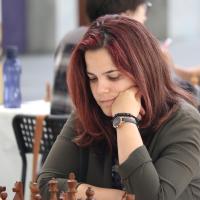
Feedback for Yanira Vigoa Apecheche
Yanira, after reviewing your recent games, here are some constructive insights to help you continue improving your chess skills:
Strengths
- Strong Opening Fundamentals: Your grasp of opening principles like controlling the center and timely development is evident. You frequently choose solid openings such as the Caro-Kann, Reti, and Trompowsky, which suit well-rounded play.
- Aggressive Play and Initiative: You are not afraid to launch attacks, as seen with moves like early pawn advances (e.g., f4, g4) and active piece play to pressure the opponent. This often puts your opponents on the back foot.
- Endgame Technique: In your recent wins, you show good technique in converting extra material or passed pawns, demonstrating sound understanding of endgame basics.
- Time Management: You manage your clock well in most of your games, allowing yourself time to calculate critical moves while keeping good speed.
Areas for Improvement
- Handling Pressure in Complex Positions: In some losses, especially against higher-rated opponents, challenges arise when defending difficult positions. Focus on improving your calculation and defensive technique to reduce tactical oversights.
- Piece Coordination: There are moments where your pieces could collaborate more effectively. For instance, aligning rooks on open files or coordinating bishops and knights for control can improve your strategic foundation.
- Pawn Structure Awareness: Pay attention to pawn breaks and weak pawns in your structure. Avoid unnecessary pawn weaknesses that could be targeted later in the game.
- Exploiting Opening Advantage: Occasionally, you get a promising opening stance but don’t fully convert it into a direct advantage. Practicing deeper opening preparation and understanding common plans in your chosen lines will help.
Tips for Next Steps
- Study classic games in your favorite openings to better understand strategic plans and typical piece maneuvers.
- Practice tactical puzzles daily to sharpen your calculation and recognition of combinations.
- Review your own games, especially the losses, to identify recurring mistakes or inaccurate moves — consider annotating them for better self-awareness.
- Try setting specific goals for each phase of the game (opening, middlegame, endgame) to structure your learning.
Keep up your dedication and curiosity! Chess improvement is a journey, and each game is an opportunity to learn and grow. If you'd like, I can help analyze particular games or positions in detail.
yaniravigoa