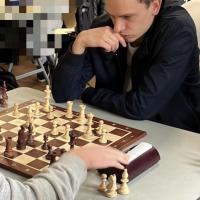
What’s going well in your rapid games
You’ve shown a strong willingness to play dynamic, tactical positions and to keep pressing for an advantage. Your opening choices indicate comfort with sharp lines, and you’ve demonstrated the ability to convert momentum into decisive results in several games.
- You handle aggressive openings confidently and generate practical chances for forking or grinding out an edge in the middlegame.
- Your willingness to complicate the position gives you chances to out-calculate opponents under time pressure.
- You have shown good resilience in complex sequences and you finish with clear intent when opportunities arise.
Opening performance highlights
Your results across several sharp openings suggest you’re comfortable navigating complicated middlegames and capitalizing on early initiative. Strong lines you’ve used include those known for rapid, tactical play, and you’ve managed to convert those advantages into wins in multiple instances.
- In several aggressive openings, you’ve achieved clean wins, showing you can outplay opponents in the middlegame when you get the initiative.
- You also demonstrate sound handling of imbalanced positions, which is valuable in rapid where precise calculation is limited by time.
- To keep building consistency, consider consolidating a small, reliable core repertoire for White and Black so you can focus more on plan execution than on move selection in the heat of the clock.
- Try deepening your understanding of these openings to improve your transition into the middlegame; this can help you avoid overextension or unnecessary risk when the tactics fade.
Opening reference ideas to explore further (placeholders for quick study): Sicilian Defense, Dutch Defense: Blackburne Variation. If you’d like a short practice example, you can review a sample line here:
.Tactical awareness and calculation
Your ability to spot tactical ideas and create threats is a real strength. In rapid games, that initiative often translates into tangible advantages. The key is to balance ambition with solid calculation so you don’t overcommit to a tactic that relies on a single continuation.
- Adopt a quick three-branch calculation habit: identify a primary tactical shot, a safe developing move, and a defensive resource for your opponent’s counterplay.
- Before launching a forcing sequence, scan for two or three alternative moves and compare their consequences. This helps you avoid traps and find the cleanest path to victory.
- When you gain a lead in the middlegame, aim to simplify to a winning endgame only after you’ve verified that the endgame is favorable. Otherwise, maintaining pressure can be more effective.
Time management and consistency
Managing time effectively is crucial in rapid. You’ve shown the capacity to generate early initiative, but ensure you preserve enough time for critical decision points in the middlegame and endgame.
- Allocate a solid development plan for the first 15 moves in each game, then reassess the position with a clear objective (positional squeeze, tactical breakthrough, or safe simplification).
- Aim to keep a balance between pawn activity and piece development to avoid creating long-term weaknesses that your opponent can target.
- Limit repeated or speculative pawn pushes on the kingside unless they’re part of a concrete plan or you have a clear tactical continuation.
4-week practical plan
Follow this focused schedule to build consistency and convert more of your sharp openings into wins.
- Daily tactics: 15–20 minutes of puzzles focusing on forks, pins, discovered attacks, and checkmating patterns to strengthen your calculation under time pressure.
- Opening refinement: pick 1–2 White and 1–2 Black lines you enjoy most, and study the typical middlegame plans and common endgames that arise from those lines. Review 2 professional games in those lines per week.
- Endgame practice: 2 sessions per week, 15–20 minutes each, focusing on rook endings and king activity with practical examples.
- Game review habit: after each rapid game, write down 3 takeaways—one thing you did well, one mistake, and one adjustment for future games.