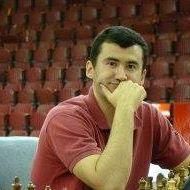
Mikhail Kobalia - Chess Grandmaster Extraordinaire
Mikhail Kobalia is a fierce chess Grandmaster known for his tactical savvy and unwavering dedication to the 64 squares. His rating has soared to impressive heights, peaking at an astonishing 2862 in Blitz chess during early 2022—a true testament to his quick wit and lightning-fast calculation abilities.
With a playing style characterized by deep strategic understanding and a penchant for endgames (he delights in them almost 9 out of 10 games!), Kobalia is a master at crafting comebacks, boasting an astonishing comeback rate near 89%. He’s not one to give up easily—even after losing material, his win rate remains above 54%.
When it comes to openings, Kobalia keeps his foes guessing with a mysterious "Top Secret" repertoire that has granted him over 872 wins in Blitz alone. His favorite battlefield might just be the rapid, adrenaline-pumping Blitz format, where he holds a solid 58% win rate across nearly 1500 games.
Off the board, Kobalia’s games are a rollercoaster filled with dramatic sacrifices, tactical fireworks, and, occasionally, the humble resignation when the opponent's plan is simply too elegant to refute. In May 2025, he delivered a textbook performance against “penguingm1,” culminating in a graceful resignation victory featuring a classic Ruy Lopez Fianchetto Defense.
Despite his success, Kobalia is no stranger to the occasional loss—he’s faced some tough battles against opponents like HVillagra and Njal28, learning from each defeat with the humility of a true sportsman. His psychological resilience is formidable, with a relatively low tilt factor, meaning he keeps his cool even when the stakes are high.
Whether it’s early morning blitz or a late-night rapid scramble, Kobalia's best moves strike when the clock says 7 AM, proving that champions don't need much coffee—they need chessboard clarity.
In short, Mikhail Kobalia is a chess force to be reckoned with — a tactician, strategist, and, every now and then, a cheeky checkmating wizard who reminds us all that the game is as much about wit and will as it is about pawns and knights. Keep an eye on this Grandmaster; his games are never boring and always a lesson in the artistry of competition.
What’s going well in your blitz play
You show solid fighting spirit in dynamic positions and can convert pressure into a win when you coordinate your pieces well. Your opening choices suggest you’re comfortable in sharp, tactical channels, and you often keep the initiative with active rooks and queen activity when the position opens up.
- You frequently generate strong tactical chances in the middlegame, especially when you can activate major pieces on open files.
- You perform well in several aggressive openings (for example, lines in the Moscow and Nyezhmetdinov-Rossolimo families) where you aim to seize space and create concrete threats.
- Your endgame awareness is reinforced by midgame pressure; you know how to transition into exchanges that favor your activity and pawn structure.
Key areas to focus on for improvement
Blitz rewards quick, accurate decisions. Some games show you overstepping into tactical complications or spending time on long forcing lines without a clear plan. Tightening clock management and sharpening decision-making in complex positions will help you convert more advantages.
- Time management: aim to keep a steady pace in the first half of the game and protect your clock for critical middlegame decisions.
- Decision clarity: in sharp positions, prefer forcing lines with clear plans over vague tactical improvisation; if uncertain, switch to solid, plan-driven moves that keep your king safe and keep your pieces active.
- Endgame technique: practice rook endings and king activity to convert small advantages into a win, especially when material is balanced and pawns are on the board.
- Pattern recognition: build quick recall for common structures arising from your top openings (Sicilian Moscow Variation, French, Nyezhmetdinov-Rossolimo, etc.) so you can choose strong plans faster.
Opening performance snapshot (guided takeaways)
Your results are strongest in several aggressive setups, including the Moscow Variation of the Sicilian and the French Defense, with several lines showing high success rates. Some lines such as the Slav Defense or certain Caro-Kann variants are less consistent; strengthening a couple of reliable responses in those would add resilience.
- Strengths: aggressive, tactical lines with good piece activity; effective use of open files and central pressure.
- Growth areas: broaden solid alternatives in openings where you struggle, so you don’t get tangled in heavy complexity too early.
Strength adjusted performance and what it means for training
A strength-adjusted win rate around the low-to-mid 50s in blitz indicates you’re solid and capable of beating most peers when you keep a clear plan. The next step is to tilt the odds a bit more in your favor by shaving off decision-time in tricky positions and concentrating on converting advantages earlier in the game.
- Channel that strength by focusing practice on two or three openings you enjoy and know well, and add precise middlegame plans for those lines.
- Include targeted blitz drills that simulate the most common middlegame structures you encounter in your repertoire.
Training plan for the coming weeks
- Daily tactical practice: 15–20 minutes on patterns you see often (forks, pins, discovered attacks, and typical mating nets in your favorite openings).
- Opening refinement: select two preferred lines (for example, Sicilian Moscow Variation and French Defense) and lock in 6–8 standard middlegame plans for each, with quick-reference idea summaries.
- Endgame focus: dedicate 2–3 sessions per week to rook endings and king activity against pawns to improve conversion in late middlegame/early endgame.
- Post-game review: after each blitz session, identify one move you would change in a critical moment, and one positive decision you made that you want to repeat.
- Clock discipline drills: practice two-minute blitz games with a plan to reach the critical phase (about move 20–25) with at least 5–7 minutes on the clock remaining; learn to recognize when to simplify or keep tension.
If you want, we can map this into a focused training module
I can tailor a week-by-week plan with specific problems, opening lines, and practice games. If you’d like, tell me which two openings you want to anchor your study around, and I’ll assemble a compact drill set and a practice game to apply the ideas.
🆚 Opponent Insights
| Recent Opponents | ||
|---|---|---|
| Srihari L R | 0W / 1L / 0D | View |
| Renato Terry | 4W / 4L / 2D | View |
| schoenbrunn | 1W / 0L / 0D | View |
| mywarrior500 | 1W / 0L / 0D | View |
| Nico Georgiadis | 2W / 1L / 0D | View |
| mostafasakha | 1W / 0L / 0D | View |
| cherepov_alexej | 1W / 0L / 0D | View |
| Pouya Idani | 0W / 1L / 0D | View |
| nestorvive | 1W / 0L / 0D | View |
| ecztery | 1W / 1L / 0D | View |
| Most Played Opponents | ||
|---|---|---|
| Volodar Murzin | 8W / 7L / 8D | View Games |
| Meilis Annaberdiev | 6W / 11L / 0D | View Games |
| Aleksei Sarana | 4W / 9L / 0D | View Games |
| Arystanbek Urazayev | 6W / 2L / 3D | View Games |
| Bogdan Daniel Deac | 3W / 5L / 3D | View Games |
Rating
| Year | Bullet | Blitz | Rapid | Daily |
|---|---|---|---|---|
| 2025 | 2546 | 2855 | 2449 | |
| 2024 | 2541 | 2820 | 2404 | |
| 2023 | 2747 | 2346 | ||
| 2022 | 2447 | 2831 | 2360 | |
| 2021 | 2446 | 2844 | 2400 | |
| 2020 | 2752 | 2491 |
Stats by Year
| Year | White | Black | Moves |
|---|---|---|---|
| 2025 | 135W / 63L / 15D | 87W / 80L / 27D | 84.3 |
| 2024 | 83W / 31L / 20D | 67W / 49L / 13D | 86.1 |
| 2023 | 24W / 14L / 10D | 25W / 12L / 5D | 84.6 |
| 2022 | 68W / 34L / 12D | 57W / 32L / 15D | 88.0 |
| 2021 | 82W / 35L / 15D | 78W / 41L / 12D | 84.5 |
| 2020 | 181W / 77L / 34D | 143W / 97L / 50D | 82.3 |
Openings: Most Played
| Blitz Opening | Games | Wins | Losses | Draws | Win Rate |
|---|---|---|---|---|---|
| Sicilian Defense: Alapin Variation, Sherzer Variation | 100 | 58 | 30 | 12 | 58.0% |
| Caro-Kann Defense | 92 | 50 | 31 | 11 | 54.4% |
| Caro-Kann Defense: Exchange Variation | 68 | 34 | 22 | 12 | 50.0% |
| Sicilian Defense: Moscow Variation | 51 | 35 | 14 | 2 | 68.6% |
| French Defense | 46 | 31 | 12 | 3 | 67.4% |
| Modern | 46 | 30 | 10 | 6 | 65.2% |
| Slav Defense | 44 | 19 | 14 | 11 | 43.2% |
| Sicilian Defense: Taimanov Variation | 41 | 28 | 9 | 4 | 68.3% |
| Sicilian Defense: Nyezhmetdinov-Rossolimo Attack, Fianchetto Variation | 37 | 28 | 6 | 3 | 75.7% |
| Amazon Attack | 34 | 17 | 14 | 3 | 50.0% |
| Rapid Opening | Games | Wins | Losses | Draws | Win Rate |
|---|---|---|---|---|---|
| Sicilian Defense: Moscow Variation | 7 | 3 | 2 | 2 | 42.9% |
| Sicilian Defense: Alapin Variation, Sherzer Variation | 7 | 5 | 2 | 0 | 71.4% |
| Slav Defense | 6 | 2 | 1 | 3 | 33.3% |
| Queen's Gambit Declined: Hastings Variation | 5 | 1 | 2 | 2 | 20.0% |
| London System: Poisoned Pawn Variation | 5 | 0 | 1 | 4 | 0.0% |
| Sicilian Defense: Najdorf Variation | 5 | 2 | 3 | 0 | 40.0% |
| English Opening: Caro-Kann Defensive System | 4 | 1 | 1 | 2 | 25.0% |
| Ruy Lopez: Closed | 4 | 1 | 2 | 1 | 25.0% |
| Caro-Kann Defense | 4 | 1 | 1 | 2 | 25.0% |
| French Defense | 4 | 4 | 0 | 0 | 100.0% |
| Bullet Opening | Games | Wins | Losses | Draws | Win Rate |
|---|---|---|---|---|---|
| Scandinavian Defense | 5 | 1 | 3 | 1 | 20.0% |
| French Defense | 3 | 2 | 0 | 1 | 66.7% |
| Sicilian Defense: Alapin Variation | 2 | 1 | 1 | 0 | 50.0% |
| Amazon Attack | 2 | 2 | 0 | 0 | 100.0% |
| Colle System: Rhamphorhynchus Variation | 2 | 1 | 1 | 0 | 50.0% |
| Catalan Opening: Closed Variation, Rabinovich Variation | 1 | 1 | 0 | 0 | 100.0% |
| Slav Defense | 1 | 1 | 0 | 0 | 100.0% |
| Nimzo-Larsen Attack: Classical Variation | 1 | 0 | 0 | 1 | 0.0% |
| Caro-Kann Defense: Classical Variation | 1 | 0 | 1 | 0 | 0.0% |
| Sicilian Defense | 1 | 0 | 0 | 1 | 0.0% |
🔥 Streaks
| Streak | Longest | Current |
|---|---|---|
| Winning | 10 | 0 |
| Losing | 6 | 2 |