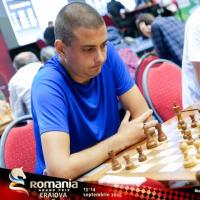
Feedback for Georgi Filev — recent rapid games
Great work overall. You showed versatility in your opening choices, and your results in several sharp lines indicate you handle tactical, out-of-the-book positions with confidence. The recent games also suggest you are building momentum over the longer term. The following notes focus on what you’re doing well and practical steps to improve further, especially for rapid time controls.
What you’re doing well
- You handle a diverse opening repertoire with confidence. You’ve performed well in aggressive lines such as the Sicilian Najdorf, the Scandi, the Italian Two Knights setup, and the Czech Defense, showing you can steer fast games into dynamic middlegames and keep pressure on your opponent.
- Your willingness to complicate positions can be a strength in rapid time controls, allowing you to generate practical chances even from less familiar lines.
- You maintain fight in tactical battles and are capable of converting advantages when you get the initiative, which is a valuable asset in rapid play.
Areas to improve
- Time management under pressure: Some games indicate you can get into tight clocks during complex middlegames. Build a simple time plan to avoid late mistakes—for example, earmark a few minutes for the critical middle game and avoid over-pressing in uncertain positions.
- Endgame conversion: In several long tactical lines, the path from advantage to full point can be delicate. Strengthen rook and minor-piece endgame technique so you can convert advantages cleanly and reduce risk of drawing or losing due to a missed resource.
- Opening depth and transitions: While your openings are strong, deepen your understanding of typical middlegame plans after your main lines. Knowing 2–3 key plans for each main opening helps you avoid drifting into passive positions when your opponent deviates from the book.
- Post-game analysis routine: After a game, write a quick recap focusing on the turning point, one or two decision points you’d change, and a practical improvement to apply next time. This reinforces learning and speeds up future improvement.
Opening performance snapshot
Your openings show strong results in several lines. Notably:
- Sicilian Defense: Najdorf Variation — high win rate, good at taking initiative in sharp play.
- Scandinavian Defense — undefeated in the sample, indicating solid handling of the early middlegame.
- Two Knights and Czech Defense — clean wins, suggesting comfort with dynamic piece activity and typical structural ideas.
- Italian Game: Two Knights Defense — solid results with a direct, tactical approach.
- Other lines such as the Ruy Lopez family and English variants show you can adapt to different pawn structures and plans.
- Be mindful of lines with weaker results in your dataset (for example a specific French line). If you encounter it often, consider reinforcing the main ideas or selecting safer, familiar branches when under time pressure.
Training plan (next 4 weeks)
- Week 1: Daily tactics practice (15–20 minutes) focused on motifs that appear in your games, followed by a 15-minute endgame basics review (rook endings, king activity, pawn endings).
- Week 2: Deepen 1–2 core openings as White and 1–2 as Black. Write down 2–3 typical middlegame plans for each main line and practice recognizing the key ideas in 5-minute review sessions after each game.
- Week 3: Increase endgame emphasis. Solve rook-and-pawn and minor-piece endgame exercises; play training games focusing on converting slight advantages into a win.
- Week 4: Post-game summaries. After every game, note the critical moment, an alternative decision, and one concrete improvement. Start applying the chosen improvement in the next few games.
Practical tips for your next sessions
- Use a simple time plan: allocate roughly equal thought to the first 15 moves in sharp games, then reassess. If still unclear, switch to safety moves that maintain activity rather than chasing complications.
- When you gain a tangible edge, look for a clear plan to convert it (avoid swapping into bare complications that give your opponent practical chances).
- Keep a mental note of recurring tactical motifs in your games (overloaded pieces, back-rank weaknesses, exposed king). Target one motif per week in a focused set of puzzles.
Encouragement
Your progress over the recent period is visible. By tightening time management, reinforcing endgame technique, and consolidating a focused repertoire, you can sustain rapid improvement and convert more of your promising positions into clean wins.