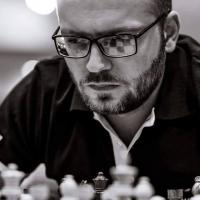
Filip Pancevski - International Master of Chess
Meet Filip Pancevski, a chess warrior armed with the prestigious title of International Master from FIDE. Filip didn't just stumble onto the chessboard; they stormed it, climbing the blitz ranks from a modest 1412 in 2012 to a striking peak above 2550 in recent years. A blitz specialist, Pancevski boasts a solid win record with a 56% win rate in over 560 games, proving they can think fast and strike even faster.
When Filip isn’t blitzing opponents into submission, the rapid and bullet formats reveal a player with razor-sharp instincts: a 73% win rate in rapid and an astonishing 93% in bullet games. It’s safe to say, Filip’s fingers might be faster than their tongue – but then again, who listens when the chessboard is calling?
Style & Strengths
- Endgame Maestro: With endgames happening in 80% of their matches, Philipp relishes the final battlefield, turning small advantages into wins like a true craftsman.
- Never Say Die: Filip's comeback rate is an impressive 89%, and their 100% win record after losing a piece is nothing short of legendary. Forget resignations; this IM fights tooth and nail.
- White Pieces Power: A 61.7% win rate with White speaks to their attacking prowess and board control.
Quirks & Anecdotes
Filip’s longest winning streak stood tall at 15 games – a streak so fierce opponents might have considered switching careers. However, the current streak is zero, because even grandmasters occasionally take a well-deserved coffee break.
Interestingly, Filip’s psychological tilt factor scores a 6, which apparently means “keep calm and castle on.” And when it comes to timing, Filip shines brightest at midnight (a 78.57% win rate at hour 0), the perfect time to catch opponents off guard – or just channel their inner night owl.
Opponents Beware
Facing rivals like bilbofesteiro and milchone1, Filip sports a perfect 100% win record, while others like whodee11 remain elusive foes. The list of vanquished opponents stretches long and wide, a testament to Filip’s relentless determination and tactical mastery.
In summary, Filip Pancevski is not your average chess player — they are a resilient, fast-thinking, endgame-loving International Master who turns every game into a captivating battle of wits. Whether you face Filip in blitz or rapid, prepare yourself for a strategic rollercoaster packed with surprises and relentless energy.
Quick summary
Nice stretch of blitz — you converted multiple advantages, finished with clean tactics, and showed a clear nose for active piece play. The recurring theme to fix is time management: your single loss and one time-decided win show ticking clock decisions matter more than the board in blitz.
Highlights — what you did well
- Good tactical finishing: the finish against lynus_kho (queen sac into mate) shows you spot forcing lines and calculate final combinations quickly. See the key sequence in this game:
- Good central space and structure play: in the Four Knights / Spanish type game vs TikiLASC_2010 you used d4–d5 and f4 effectively to open lines and restrict the opponent before improving bishops and queen — a model of how to convert small space advantage.
- Creating passed pawns and queenside pressure: in your Pirc win vs Ishanaxade you advanced queenside pawns and converted a passed pawn threat into decisive pressure — shows practical endgame instincts in blitz.
- Repertoire strength: your stats show consistent wins with lines like the Caro-Kann and several English systems — you already know which openings suit your style and score well with them.
Recurring problems & focused fixes
- Time management (biggest issue)
- Symptoms: you lost on time vs ZaliasPestininkas and often reach severe time trouble late in games. When the clock runs out, board advantage is irrelevant.
- Fixes: practice a strict blitz clock plan — at move 10 aim to have at least 60% of your starting time remaining. If you fall below ~45 seconds, switch to "safe mode": make fast, sensible developing/solid moves rather than deep calculations.
- Decision priority under time pressure
- Example pattern: in sharp situations you spend the remaining clock on long captures/complications (capturing a pawn that creates a passed pawn is often attractive but costly in time). Prefer simpler, consolidating moves when <30s remain.
- Rule of thumb: when <20s, play the move that keeps your position intact and keeps the opponent uncomfortable — trade when equal material and simplify when ahead.
- Conversion vs simplification
- You frequently get a space/initiative edge — sometimes you continue to press tactically instead of simplifying into a won endgame. When ahead, look to trade pieces and remove counterplay (rooks off, active minor pieces exchanged) if it wins you an easy technical game with less calculation.
- Opening move-order sharpness
- You have strong scores in many systems, but in some lines (for example complex Trompowsky or offbeat sideline positions) you end up in messy pawn-structure battles where the clock becomes decisive. Tighten move orders in those sidelines or avoid them in blitz if they demand too much calculation.
Concrete drills and study plan (weekly)
- Tactics: 10–20 minutes/day on mixed puzzles (forks, pins, mating nets). Focus on quick pattern recognition — stop when you average <10s per easy tactic and 30s for harder ones.
- Blitz-specific clock drills: play 5+0 and 5+2 sessions but force yourself to finish with at least 20s on the clock three games in a row. Practice the "safe-mode" rule under 30s.
- Endgame basics: 15–20 rook endgame positions — Lucena, Philidor and simple pawn races. Convert training: when you have small advantages, practice converting with minimal tactics.
- Opening refinement: pick 2–3 main lines you score well with (for example your successful English/Caro-Kann/Pirc lines). Build a 6–8 move repertoire per side and memorize typical plans (pawn breaks, piece jumps).
- Post-game 5-minute post-mortems: after each session, review your worst time-trouble game and identify exactly where you should have simplified or made a faster decision.
Short tactical checklist for blitz
- Before moving, scan for immediate captures, checks, and threats (5 seconds max).
- If ahead in material: ask “Can I trade now?” If yes, trade pieces.
- If behind on time: prefer moves that keep king safe and avoid tactical skirmishes unless forced.
- Watch for back-rank weaknesses and knight forks — these appear often in your games where pieces cluster around the king.
Action plan — next 7 days
- 3 blitz sessions (20 games total): enforce the clock thresholds (move 10 with ≥50% time left).
- Daily tactics: 15 minutes focused on mates in 2–3 and forks/pins.
- One 30-minute endgame drill: 10 rook+pawn vs rook positions.
- Refine your top opening (pick one from your best-performing list — e.g., English Opening or Caro-Kann Defense) to 6 moves and learn 2 typical plans.
- After each session, tag 1 loss for a 5-minute post-mortem where you identify if time or a strategic error caused the result.
Example game to review
Replay the tactical finish vs lynus_kho to practice recognizing the forcing plan (queen sac → decisive knight fork/mate). Use this viewer and step through the last 10 moves:
Opponent: lynus_kho — Opening: Alekhines-Defense.
Final encouragement
Your rating trend and win rates show strong, sustained performance — you're improving and converting complex positions. Fixing the clock habits and applying a simple “simplify when ahead” rule in blitz will immediately raise your conversion rate. Small practice, big payoff.
🆚 Opponent Insights
| Recent Opponents | ||
|---|---|---|
| zaliaspestininkas | 0W / 1L / 0D | View |
| TikiLASC_2010 | 1W / 0L / 0D | View |
| Ishanaxade | 1W / 0L / 0D | View |
| lynus_kho | 1W / 0L / 0D | View |
| Saharsh Santosh | 1W / 0L / 0D | View |
| quicksilver2 | 1W / 0L / 0D | View |
| Most Played Opponents | ||
|---|---|---|
| devil71 | 8W / 10L / 2D | View Games |
| paulmorphy210 | 18W / 1L / 0D | View Games |
| long_live_makedonija | 14W / 0L / 0D | View Games |
| Nikita Meshkovs | 5W / 8L / 0D | View Games |
| valmiki | 7W / 4L / 1D | View Games |
Rating
| Year | Bullet | Blitz | Rapid | Daily |
|---|---|---|---|---|
| 2025 | 2574 | |||
| 2024 | 2543 | |||
| 2021 | 2544 | 2513 | ||
| 2020 | 2000 | 2513 | 2513 | |
| 2019 | 2397 | |||
| 2018 | 2406 | |||
| 2016 | 2459 | |||
| 2015 | 2373 | |||
| 2014 | 2402 | 1720 | ||
| 2013 | 2238 | 1200 | ||
| 2012 | 2038 |
Stats by Year
| Year | White | Black | Moves |
|---|---|---|---|
| 2025 | 2W / 0L / 0D | 3W / 1L / 0D | 75.7 |
| 2024 | 1W / 3L / 0D | 2W / 0L / 0D | 67.8 |
| 2021 | 16W / 12L / 1D | 20W / 11L / 1D | 77.8 |
| 2020 | 61W / 20L / 8D | 47W / 37L / 3D | 74.8 |
| 2019 | 9W / 3L / 0D | 6W / 4L / 1D | 71.9 |
| 2018 | 25W / 22L / 2D | 23W / 31L / 1D | 76.6 |
| 2016 | 13W / 8L / 3D | 12W / 10L / 1D | 78.1 |
| 2015 | 4W / 4L / 1D | 5W / 3L / 0D | 58.5 |
| 2014 | 29W / 7L / 2D | 20W / 18L / 2D | 79.4 |
| 2013 | 18W / 13L / 3D | 23W / 12L / 1D | 69.6 |
| 2012 | 9W / 3L / 0D | 8W / 3L / 1D | 64.8 |
Openings: Most Played
| Blitz Opening | Games | Wins | Losses | Draws | Win Rate |
|---|---|---|---|---|---|
| Czech Defense | 30 | 15 | 14 | 1 | 50.0% |
| Modern | 24 | 10 | 14 | 0 | 41.7% |
| English Opening: Agincourt Defense | 20 | 10 | 8 | 2 | 50.0% |
| English Opening: Anglo-Indian Defense | 20 | 13 | 6 | 1 | 65.0% |
| English Opening: Drill Variation | 20 | 12 | 6 | 2 | 60.0% |
| Pirc Defense: Classical Variation | 19 | 11 | 7 | 1 | 57.9% |
| Caro-Kann Defense | 14 | 10 | 4 | 0 | 71.4% |
| English Opening | 14 | 9 | 5 | 0 | 64.3% |
| French Defense | 13 | 9 | 2 | 2 | 69.2% |
| Amazon Attack: Siberian Attack | 11 | 9 | 2 | 0 | 81.8% |
| Rapid Opening | Games | Wins | Losses | Draws | Win Rate |
|---|---|---|---|---|---|
| Amar Gambit | 5 | 4 | 1 | 0 | 80.0% |
| Czech Defense | 3 | 2 | 1 | 0 | 66.7% |
| English Opening: Drill Variation | 2 | 2 | 0 | 0 | 100.0% |
| French Defense | 1 | 0 | 0 | 1 | 0.0% |
| King's Indian Attack: French Variation | 1 | 1 | 0 | 0 | 100.0% |
| Pirc Defense: Classical Variation | 1 | 1 | 0 | 0 | 100.0% |
| Philidor Defense | 1 | 1 | 0 | 0 | 100.0% |
| Sicilian Defense: Closed, Anti-Sveshnikov Variation, Kharlov-Kramnik Line | 1 | 1 | 0 | 0 | 100.0% |
| East Indian Defense | 1 | 1 | 0 | 0 | 100.0% |
| Barnes Defense | 1 | 1 | 0 | 0 | 100.0% |
| Bullet Opening | Games | Wins | Losses | Draws | Win Rate |
|---|---|---|---|---|---|
| Amar Gambit | 2 | 2 | 0 | 0 | 100.0% |
| Scandinavian Defense | 2 | 2 | 0 | 0 | 100.0% |
| Grünfeld Defense: Counterthrust Variation | 1 | 1 | 0 | 0 | 100.0% |
| Döry Defense | 1 | 1 | 0 | 0 | 100.0% |
| Bird Opening: Dutch Variation | 1 | 1 | 0 | 0 | 100.0% |
| QGD: 3.Nc3 Nf6 4.e3 | 1 | 1 | 0 | 0 | 100.0% |
| Barnes Defense | 1 | 1 | 0 | 0 | 100.0% |
| Sicilian Defense: Accelerated Dragon | 1 | 1 | 0 | 0 | 100.0% |
| Caro-Kann Defense | 1 | 1 | 0 | 0 | 100.0% |
| Australian Defense | 1 | 1 | 0 | 0 | 100.0% |
🔥 Streaks
| Streak | Longest | Current |
|---|---|---|
| Winning | 15 | 0 |
| Losing | 6 | 1 |