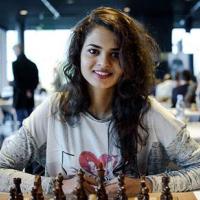

Coach Chesswick
Feedback for Tania Sachdev
What you are doing well
- Structured opening repertoire. Most of your recent games as White start with 1.d4 and quickly transpose to Queen’s Gambit– or Catalan-type set-ups. You understand the typical pawn-breaks (…c5 as Black, b4/c5 as White) and are comfortable fighting for the e4/e5 squares.
- Dynamic pawn play. In the win versus praneeth56 you seized space with 8.c5 and the b-pawn thrusts (16.b5, 17.bxc6) to fix Black’s queenside. These space-gaining ideas are a clear strength in your strategic play.
- Conversion technique. Once you reach a winning end-game you are generally clinical. The rook-and-pawn end-game in the same game was converted without allowing counter-play—good use of the bridge-building technique to escort the f-pawn.
- Tactical alertness. Several games feature accurate tactical shots (e.g. 26.Nc4! and 32.c6! in earlier wins). Your eye for forcing continuations regularly nets material.
Key themes to improve
- Time-management. Three of your five most recent losses were on the clock. When you enter Zeitnot small inaccuracies pile up and otherwise winning positions (e.g. the 81-move London-System game) slip away. Aim to keep ≥ 40 s by move 25 in 3-minute games; train with “Clock-Storm” exercises or force yourself to move every 5 seconds in won positions.
- Critical-moment calculation. In the Alapin Sicilian (loss vs paularossi99) the piece-sac
18.Qb6 Rxe2 19.Bxd6was missed and Black’s position collapsed. Build a habit of a 3-step blunder-check in sharp positions: (1) Checks, (2) Captures, (3) Threats for both sides. - Keeping the king safe when you push flank pawns. Games with early g- and h-pawn thrusts sometimes leave dark-square holes (see London loss where …f4 created targets). Add a dose of Prophylaxis—ask “what is my opponent’s next attacking move?” before advancing wing pawns.
- Black vs the English/London structures. When you meet quiet set-ups (London, 1.c4 e5 sidelines) you expend a lot of time finding plans. Prepare one system line—e.g. the early …c5 & …Qb6 idea against the London—to save clock and energy.
Opening lab suggestions
- Add a second weapon vs 1.e4. You default to the Sicilian but struggled against the Alapin. Consider the French or 1…e5 as a practical alternative on tired days.
- Deepen your knowledge of 3…f5 Queen’s-Gambit ("Baltic") ideas. Your win shows promise—study typical exchange sacs on f3 and the …g5 break to broaden your attacking options.
End-game drill list
- Rook + 4 vs 4 with a passed pawn (focus on cutting the king).
- Minor-piece endings with pawn majorities on opposite wings—use the f- vs h-pawn race from your BurgersAreBetter game as a model.
Illustrative PGN (latest win)
Your stats snapshot
Peak Blitz rating:
When do you play best?
Quick look at your activity:
Training plan for February
- 10 minutes of Chess-Tempo tactics daily with 30 s soft limit per puzzle to mimic blitz.
- Three annotated model games in the Baltic QGD and in the French (vs 1.e4).
- Weekly 30-minute end-game session—start with Dvoretsky’s rook-end-game chapter 3.
- Play two 10|0 games every Sunday focusing solely on clock usage (goal: finish with >2 minutes).
Keep the energy high and remember: strong practical play + good clock habits will push you past the next rating band. Happy studying!