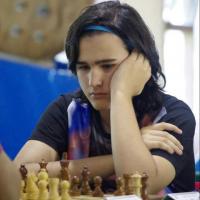
Marcos Lianes – The International Master of Chess
Marcos Lianes is not just any chess player—he’s an International Master recognized by FIDE, a title that catapults him into the upper echelons of the chess world. His journey resembles a carefully orchestrated process of cellular division: starting with modest ratings and, over the years, evolving into a force that leaves his opponents in a state of strategic mutation.
From his early blitz days back in 2013, where he navigated the board with a rating reminiscent of a single, determined cell, Marcos has blossomed into a complex organism of tactical skill. His ratings have consistently spiraled upwards—each year, a new phase in his developmental cycle, much like the replication process in living cells, each division contributing to his overall growth.
Whether it’s the rapid decisions in bullet chess or the intricate maneuvers in blitz, Marcos demonstrates a remarkable blend of instinct and refined strategy. His games, often filled with unexpected twists and calculated sacrifices, show the kind of evolutionary brilliance that would make Darwin proud. In true biological fashion, he adapts to every challenge, his style as dynamic as the genetic code itself.
Not only does Marcos excel in overt tactical battles, but his performance in lengthy endgames further showcases his ability to endure and evolve. His "endgame frequency" tells the story of a player who survives and thrives in the grueling final stages—a true testament to his competitive DNA.
Marcos Lianes continues to inspire chess enthusiasts around the world, his career serving as a shining example of how the sparks of early potential can bloom into a masterful display of creative and resilient play. Much like the marvels of biological evolution, every move he makes is a building block for a legacy that is both fascinating and formidable.
Overview of your recent rapid games
You show clear fighting spirit with sharp, dynamic positions. You often seize the initiative and convert that pressure into tangible advantages. In a few games, the timing and tactical awareness paid off beautifully, culminating in decisive finishes. There are also moments where accuracy slips in complex middlegame tactics, which you can tighten up with targeted practice.
What you are doing well
- You create strong attacking chances when your opponent’s king is unsettled, coordinating pieces to maximize pressure.
- You’re good at leveraging initiative to convert opportunities into wins and even clean finishes when you spot a tactical sequence.
- Your opening choices often lead to dynamic, double-edged positions where you are comfortable calculating and weighing risks.
- You keep fighting in complicated middlegames and look for active plans rather than settling for passive defense.
Areas to improve and practical steps
- Time management: allocate thinking time at critical junctures (early middlegame and around key exchanges) to reduce pressure on the clock later in the game. Use shorter, focused reviews of candidate moves instead of rushing to a quick decision.
- Consolidation after trades: in some games, you simplify into positions where you no longer maintain clear winning chances. Before exchanging pieces, check whether the simplification still preserves your initiative or creates your opponent’s counterplay.
- Guarding against back-rank and tactical risks: stay vigilant for back-rank weaknesses and tactical shots that swing material. Develop a habit of scanning for a single tactical counter after each significant exchange.
- Endgame technique: practice common rook endings and pawn endgames. A simple routine—review one endgame motif after each game—will boost your conversion in many tight results.
- Opening depth and consistency: you perform well in several lines, but prepare a small, reliable toolkit for the top 2–3 openings you use most. Know typical middlegame plans and common pawn structures to stay ahead of your opponents’ ideas.
Opening performance and plan
Your results are strong in several flexible openings that lead to active play. Consider deepening your understanding of those lines to solidify middlegame plans and improve decision-making under pressure. It’s also helpful to have a concise plan ready for opponents’ common replies to keep your play coherent from move one.
Training ideas for the next two weeks
- Daily 15-minute tactical puzzles focusing on motifs you encounter most (forks, pins, discovered attacks, and back-rank themes).
- Two weekly openings study sessions: choose two high-utility lines you favor and map out a simple move-tree with typical middlegame ideas and standard responses.
- Endgame practice: dedicate two short sessions to rook endings and king activity in pawn endgames to improve conversion chances.
- Post-game reflection: after each rapid game, write one decision you would revise and one alternative line to consider next time.
Next steps
If you want, I can tailor a focused two-week plan around your strongest openings and the recurring mistakes you’ve shown. Share a few recent games you’d like reviewed, and I’ll point out precise moments to improve with concrete alternatives and plan adjustments.
🆚 Opponent Insights
| Recent Opponents | ||
|---|---|---|
| Vesna Bogdanovic | 3W / 1L / 0D | View |
| the-rock-man | 1W / 0L / 0D | View |
| dr64verse | 4W / 2L / 0D | View |
| salimovshovkat | 2W / 0L / 0D | View |
| Teodor-Cosmin Nedelcu | 1W / 0L / 0D | View |
| David Zhurbinsky | 3W / 1L / 0D | View |
| gracejo | 2W / 0L / 1D | View |
| gmbackrang | 1W / 0L / 0D | View |
| dlkm93 | 0W / 1L / 0D | View |
| al_sa_co | 1W / 0L / 0D | View |
| Most Played Opponents | ||
|---|---|---|
| scarymelodies | 62W / 40L / 5D | View Games |
| Pedro Gines | 58W / 35L / 3D | View Games |
| aakash-dalvi7 | 54W / 34L / 2D | View Games |
| Johnathan Bakalchuk | 20W / 60L / 1D | View Games |
| LordofSanDiego | 41W / 37L / 2D | View Games |
Rating
| Year | Bullet | Blitz | Rapid | Daily |
|---|---|---|---|---|
| 2025 | 3004 | 2980 | ||
| 2024 | 2923 | 2803 | 2564 | |
| 2023 | 2949 | 2728 | ||
| 2022 | 2726 | |||
| 2021 | 2900 | 2714 | 2580 | |
| 2020 | 2805 | 2656 | 2580 | |
| 2019 | 2542 | 2600 | ||
| 2018 | 1934 | 2617 | 1840 | |
| 2017 | 2336 | 2405 | 1811 | |
| 2016 | 2335 | 1958 | 1908 | |
| 2015 | 2005 | 1620 | ||
| 2014 | 1442 | 1406 | 1366 | |
| 2013 | 1224 | 1421 |
Stats by Year
| Year | White | Black | Moves |
|---|---|---|---|
| 2025 | 1021W / 510L / 184D | 1001W / 553L / 166D | 96.5 |
| 2024 | 1651W / 709L / 201D | 1576W / 789L / 177D | 86.8 |
| 2023 | 35W / 17L / 3D | 30W / 21L / 7D | 90.3 |
| 2022 | 18W / 15L / 3D | 24W / 16L / 1D | 94.8 |
| 2021 | 70W / 52L / 13D | 82W / 50L / 7D | 97.7 |
| 2020 | 147W / 115L / 26D | 150W / 106L / 24D | 88.1 |
| 2019 | 539W / 477L / 71D | 531W / 491L / 59D | 90.0 |
| 2018 | 14W / 10L / 4D | 10W / 9L / 0D | 36.3 |
| 2017 | 16W / 23L / 3D | 19W / 17L / 7D | 71.4 |
| 2016 | 268W / 167L / 39D | 249W / 172L / 36D | 80.9 |
| 2015 | 72W / 35L / 5D | 68W / 33L / 6D | 68.4 |
| 2014 | 15W / 5L / 2D | 16W / 5L / 0D | 57.6 |
| 2013 | 5W / 0L / 0D | 2W / 3L / 0D | 45.7 |
Openings: Most Played
| Bullet Opening | Games | Wins | Losses | Draws | Win Rate |
|---|---|---|---|---|---|
| Modern | 1119 | 673 | 391 | 55 | 60.1% |
| Sicilian Defense | 1073 | 658 | 344 | 71 | 61.3% |
| Caro-Kann Defense | 568 | 326 | 198 | 44 | 57.4% |
| Barnes Opening: Walkerling | 494 | 319 | 147 | 28 | 64.6% |
| Colle System: Rhamphorhynchus Variation | 484 | 277 | 174 | 33 | 57.2% |
| French Defense | 406 | 239 | 136 | 31 | 58.9% |
| Modern Defense: Pterodactyl Variation | 363 | 219 | 127 | 17 | 60.3% |
| Scandinavian Defense | 342 | 205 | 116 | 21 | 59.9% |
| Amar Gambit | 335 | 207 | 101 | 27 | 61.8% |
| Unknown Opening* | 334 | 293 | 36 | 5 | 87.7% |
| Blitz Opening | Games | Wins | Losses | Draws | Win Rate |
|---|---|---|---|---|---|
| Modern | 700 | 422 | 215 | 63 | 60.3% |
| Sicilian Defense | 636 | 375 | 192 | 69 | 59.0% |
| Barnes Opening: Walkerling | 365 | 203 | 117 | 45 | 55.6% |
| Modern Defense: Pterodactyl Variation | 305 | 159 | 103 | 43 | 52.1% |
| Caro-Kann Defense | 215 | 131 | 57 | 27 | 60.9% |
| Benoni Defense: Benoni Gambit Accepted | 193 | 98 | 79 | 16 | 50.8% |
| French Defense | 181 | 106 | 52 | 23 | 58.6% |
| Benoni Defense: Old Benoni | 132 | 77 | 38 | 17 | 58.3% |
| Australian Defense | 128 | 69 | 42 | 17 | 53.9% |
| Colle System: Rhamphorhynchus Variation | 109 | 69 | 27 | 13 | 63.3% |
| Daily Opening | Games | Wins | Losses | Draws | Win Rate |
|---|---|---|---|---|---|
| Modern | 20 | 13 | 6 | 1 | 65.0% |
| Sicilian Defense: O'Kelly Variation | 13 | 8 | 5 | 0 | 61.5% |
| French Defense: Exchange Variation | 11 | 9 | 1 | 1 | 81.8% |
| Sicilian Defense | 10 | 6 | 4 | 0 | 60.0% |
| Benoni Defense: Benoni Gambit Accepted | 10 | 10 | 0 | 0 | 100.0% |
| Modern Defense: Pterodactyl Variation | 9 | 6 | 2 | 1 | 66.7% |
| Benoni Defense: Old Benoni | 9 | 7 | 1 | 1 | 77.8% |
| Unknown | 9 | 4 | 5 | 0 | 44.4% |
| Barnes Defense | 9 | 6 | 3 | 0 | 66.7% |
| KGD: Classical, 3.Bc4 | 8 | 5 | 3 | 0 | 62.5% |
| Rapid Opening | Games | Wins | Losses | Draws | Win Rate |
|---|---|---|---|---|---|
| Barnes Opening: Walkerling | 6 | 6 | 0 | 0 | 100.0% |
| Modern | 5 | 4 | 1 | 0 | 80.0% |
| Colle System: Rhamphorhynchus Variation | 5 | 5 | 0 | 0 | 100.0% |
| Australian Defense | 4 | 3 | 1 | 0 | 75.0% |
| Barnes Defense | 3 | 3 | 0 | 0 | 100.0% |
| Sicilian Defense | 2 | 1 | 0 | 1 | 50.0% |
| French Defense | 2 | 1 | 1 | 0 | 50.0% |
| English Opening | 2 | 1 | 1 | 0 | 50.0% |
| Döry Defense | 2 | 2 | 0 | 0 | 100.0% |
| Amar Gambit | 2 | 2 | 0 | 0 | 100.0% |
🔥 Streaks
| Streak | Longest | Current |
|---|---|---|
| Winning | 53 | 0 |
| Losing | 24 | 1 |