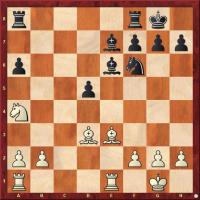
Overview of your recent rapid games
Your recent results show clear opportunities to convert more pressure into wins. You demonstrated sharp tactical creativity in your winning game, and you’ve been comfortable choosing aggressive setups that put opponents on the back foot. In the losses and draws, there are instructive moments where tighter calculation and better time management could have helped you maintain momentum or steer to safer simplifying lines. For quick context on who you’ve faced recently, you can view profiles of some opponents here: Watu Kobese, Goodness Odey Ekunke, Tanitoluwa Adewumi, Tersee Ferdinand, Farai Mandizha, Tunde Onakoya.
What you’re doing well
- You show strong tactical awareness and willingness to sacrifice material for concrete attack when the position calls for it, as seen in your winning game with a decisive finish.
- You take the initiative in the opening and middle game, creating practical problems for your opponents early on rather than passively waiting for opportunities.
- In drawn games, you maintained pressure and kept the position fluid, which limited your opponent’s counterplay and gave you chances to press for a win.
Areas to improve
- Calculation discipline in sharp, tactical sections: in some tight middlegame confrontations, you spent time on complex lines that didn’t always yield the best practical result. Practice identifying 2–3 candidate continuations in critical moments and choosing the safest, highest-pressuring line.
- Time management in rapid games: you sometimes spent a lot of time on a single plan, which left you with less room to navigate the endgame or defend against a sudden opponent initiative. Work on allocating time to plan A, plan B, and a quick fallback in key positions.
- Defensive technique when facing sustained opponent pressure: in the loss against the opponent with the aggressive Sicilian, there were moments where prophylaxis and simpler exchanges could have neutralized the immediate threats. Focus on identifying threats from the opponent and trading into simpler structures when you’re under pressure.
- Endgame clarity: a few drawn games suggest opportunities to convert with a precise technique in rook and minor piece endings. strengthening routine endings practice will help turn draws into wins.
Concrete plan for the next few weeks
- Daily tactics practice: 15 minutes focused on patterns that lead to forcing sequences, mates, or winning material.
- Opening work: deepen understanding of two reliable lines you already use frequently. For example, continue building familiarity with the East Indian Defense and the Sicilian Four Knights Cobra Variation, including typical middlegame plans and common counterattacks. Use the placeholders resources: East Indian Defense and Sicilian Defense: Four Knights Variation.
- Endgame training: dedicate 20 minutes a few times a week to rook endings and king activity, plus simple pawn endgames to convert small advantages.
- Post-game reflections: after each rapid game, write a brief 3-point review: what went well, what didn’t, and what you’ll adjust next time.
- Time management drills: in practice games and training, enforce a maximum pace for critical segments (for example, limit the opening to 5–7 minutes and the middlegame to 15 minutes total) to mimic tournament time pressure and improve decision-making under clock stress.
Opening choices to explore
Your openings show solid results in dynamic lines, particularly with the Sicilian Four Knights Cobra Variation and the East Indian Defense. Consider honing these lines further and pairing them with a concise plan for the middlegame. Useful reminders and study paths can be found in resources like: Sicilian Defense: Four Knights Variation and East Indian Defense.
Training plan and next steps
- Set a weekly schedule that alternates between tactics, opening study, and endgame practice, with 1 long review session per week focusing on a recent game you found challenging.
- Incorporate quick post-mortem notes after each game, highlighting a single improvement and a single affirmation you can carry forward.
- Track progress with small, measurable goals (e.g., convert at least one favorable middlegame into a win in the next 5 games, or reduce the number of times you enter risky tactical lines by half).
- Optional drills: use a PGN sampler to practice specific themes from your recent games, for example focusing on the endgame technique seen in the wins and how to avoid excessive risk in the middlegame.
Optional practice snippets
To review a sample, you can study a concise PGN snippet that mirrors your style and editorials, or try out a practice session using the following placeholder for your training log:
.