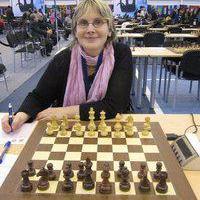
Hi Lenka Ptacnikova!
You have been playing dynamic, ambitious chess, often steering the game into unbalanced Sicilian structures as Black and flexible English / King’s-Indian-Attack set-ups as White. Below is a concise review of your recent games together with personalised training tips.
Quick stats
- Personal best so far: 2288 (2021-05-17)
- When you score best:
- Strongest day(s):
Your current strengths
- Opening depth in the Sicilian – Your victories against David Camacho and Elise Wu show confident handling of both ...e6 and ...d5 set-ups, gaining central breaks and piece activity.
- Tactical alertness – In several wins you converted material advantages with precise combinations (e.g. ...Nc4! in the Taimanov, ...Re1+ sequence vs. 2306 opposition).
- Feel for initiative – You willingly sacrifice pawns (…d5, …b5) to seize open files and create mating nets on the light squares.
Key themes to improve
- Clock management – Four of your last six losses were on time (vs. Vitor Ferreira, Daniel Beletic, Alexander Hernandez Jimenez, Alessandro Rodrigues Da Silva). Positions were still playable, so speeding up by move 20 would instantly lift your score.
- Conversion technique – Good positions sometimes fizzle out when extra material is returned without necessity (e.g. the Q vs. R+B ending on move 30 against Beletko). Strengthening your end-game routine will turn more edges into points.
- Handling of opposite-side pawn storms – The loss vs. VitorBronson featured pawn chains on both flanks; your king lacked luft and counter-play. Sharpen your understanding of pawn lever timing and prophylactic moves like h3/h6.
- Early queen choices as White – In multiple English games you played Qd1–c2–d1 (or similar), costing precious tempi and leaving you behind in development. Streamline the move order or choose plans where the queen has a clear destination.
Training plan (4 weeks)
| Week | Main focus | Practical task |
|---|---|---|
| 1 | Clock discipline | Play 30 games of 3 + 2 using a “30-second rule”: make every move in under 30 s until move 20. |
| 2 | Technical end-games | Solve 10 rook-and-pawn studies daily; drill R+P vs. R and opposite-colour bishops on an end-game trainer. |
| 3 | Pawn-storm defence | Analyse 5 master games where one side wins despite being attacked (start with Caruana–MvL 2019). Annotate when each defensive resource was played. |
| 4 | Opening tidying | Prepare one English line with an early e4 push so your queen stays home; add a concrete anti-Mengarini reply as Black to avoid time-consuming improv. |
Pro-tips you can apply immediately
- Adopt the “Scan-Plan-Move” routine: check forcing moves (checks, captures, threats), set a plan, then play – this keeps calculation concise and quick.
- When up material, simplify using piece exchanges rather than pawn grabs; your pieces coordinate better than pawns defend.
- Create a pre-move package for obvious recaptures in increment games – safe pre-moves buy you vital seconds.
- Use the two-pawn test: if you push a wing pawn two squares, ask “Can it become a target in three moves?” If unsure, play a developing move instead.
Final encouragement
Your tactical eye and opening repertoire are already title-worthy. Tightening time usage and polishing end-game fundamentals could easily add 100+ Elo. Keep analysing your own games (especially the ones you flagged on time) and stay curious — improvement will follow quickly.
Good luck in your next Late Titled Tuesday, Lenka!